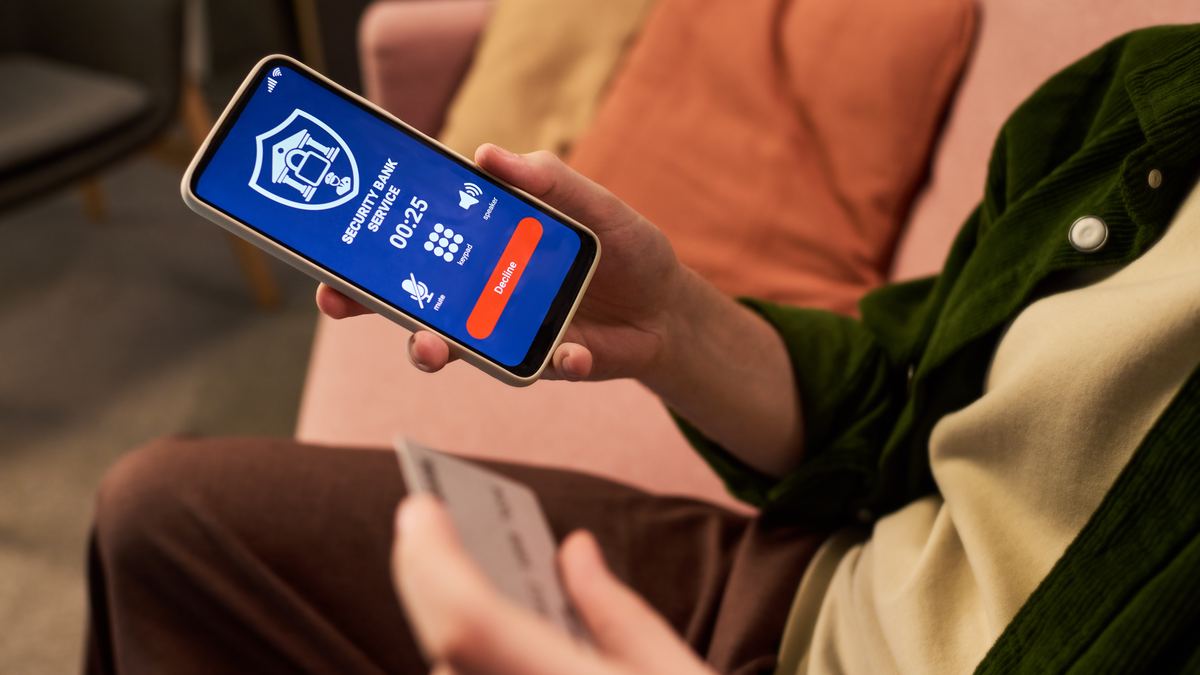
Gross negligence is the reason Bulgarian banks most often give for refusing to refund money after phishing. You clicked a link in an SMS "about a delivery", entered your details on a site that looked like your online banking, or read out a code over the phone. In reply to your complaint you receive a short letter: "the transaction was confirmed with your security credentials; there was gross negligence". Many people accept this as final. The law, however, says otherwise.
Here we look at this one dispute only: what "gross negligence" means under the Bulgarian Payment Services and Payment Systems Act (Закон за платежните услуги и платежните системи, ЗПУПС), who has to prove it, why an entered code is not the same as consent, and what changed with the judgment of the Court of Justice of the European Union of 15 October 2026. What to do in the first hours after your account is emptied is covered in our article on unauthorised card and account transactions. If you ordered the transfer yourself, see our article on vishing and the "safe account" scam.
The first question: was the transaction authorised?
Under Art. 70(1) of the Payment Services and Payment Systems Act, a payment transaction is authorised if the payer ordered it or consented to its execution. Without consent, it is unauthorised.
In classic phishing you do not order a payment. You enter your details on a fake site, and the fraudster uses them to order a transfer. As a rule, therefore, the transaction is unauthorised and three rules apply:
- the bank refunds the amount immediately and no later than the end of the next business day (Art. 79(1));
- you must notify the bank without undue delay, and no later than 13 months after the account was debited (Art. 77(1));
- without fraud or gross negligence, you bear at most EUR 50 for transactions before notification (Art. 80(1)) and nothing after it (Art. 80(5)).
Gross negligence is the exception to this protection. Under Art. 80(3), the payer bears all losses, with no cap, if they caused them by fraud or by failing, intentionally or through gross negligence, to meet their obligations under Art. 75. The most important of these is to take all reasonable steps to keep their personalised security credentials safe (Art. 75, item 3): passwords, PIN, one-time codes.
What is "gross negligence"?
The Act does not define it. The courts use the general civil-law concept. In the case law of the Bulgarian Supreme Court of Cassation (Върховен касационен съд), also cited in payment-dispute judgments, gross negligence is a failure to exercise the care that even the most careless person would exercise in similar circumstances. It is not enough that you could have been more careful. The conduct must have been plainly reckless.
Directive (EU) 2015/2366, which the Bulgarian Act transposes, takes the same line. Its recitals describe gross negligence as more than mere negligence and give the example of keeping the credentials used to authorise a payment next to the payment instrument, in a form accessible to third parties.
The conclusion: whether clicking a link or giving away a code is gross negligence depends on the facts. There is no automatic answer.
The burden of proof is on the bank
Two provisions of Art. 78 decide most disputes:
- Para. 1: where you say you did not authorise the transaction, the bank must prove its authenticity, that it was accurately recorded and entered in the accounts, and that there was no technical breakdown.
- Para. 4: the recorded use of the payment instrument is not in itself sufficient evidence that you authorised the transaction or acted fraudulently or with gross negligence. The bank must provide evidence of that.
The sentence "the transaction was confirmed with a code sent to your phone" proves only that the code was used. It does not prove who used it, whether you understood what it was for, or what you saw on the screen.
An SMS code is not consent
A one-time code is an element of strong customer authentication (Art. 100 of the Act): a technical mechanism by which the bank checks that the account holder is on the other side. Consent under Art. 70 is something else: your will that a specific payment be made to a specific recipient.
When a fraudster persuades you to read out a code "so we can stop a suspicious transaction" or "so you can receive money from the buyer", you are not expressing a will to pay the fraudster. The question then is whether disclosing the code was grossly negligent. Not all courts take this approach, especially where the SMS clearly described the amount and the recipient. We give examples below.
The CJEU judgment in Case C-70/25: refund first, argue later
On 15 October 2026 the Court of Justice of the European Union ruled on a reference from a Polish court. A customer was selling an item on an online platform; the "buyer" sent her a link supposedly to confirm the sale; she landed on a fake website of her bank and entered her online banking details. The fraudster transferred around EUR 700. The bank refused a refund because the customer had not kept her details safe and had been grossly negligent.
The Court held that:
- for an unauthorised transaction the bank must refund the amount immediately, at the latest by the end of the next business day, provided the customer notified it without undue delay;
- the only exception is reasonable grounds to suspect fraud by the customer, communicated to the competent authority;
- the bank's view that the customer was grossly negligent does not entitle it to refuse the immediate refund;
- afterwards the bank may claim the loss from the customer if it proves gross negligence or intent.
The question "is the amount refunded" is thus separated from the question "who bears the loss in the end". The Court's interpretation also binds the Bulgarian courts, because the Bulgarian Act transposes the same directive. How exactly they will apply it in individual cases remains to be seen.
From our practice: The judgment does not mean the money necessarily stays with you. The bank can seek it back, but then it has to bring the claim and prove gross negligence. The initiative and the burden move from you to the bank, and that is a huge difference.
I clicked a link or entered a code: is that gross negligence?
Here is how the most common situations are usually argued. The table does not guarantee an outcome: the court assesses each case separately.
| Situation | Against gross negligence | For gross negligence |
|---|---|---|
| You opened a link without entering anything | Opening alone discloses no data | Weak, unless you installed a remote access program |
| You entered details on a fake site indistinguishable from the real one | A convincing fraud with no obvious signs | The site address was visibly different |
| You read out a code to a "bank employee" | Spoofed number, the caller knew your details, pressure and fear | The bank repeatedly warned never to share a code |
| The SMS showed the amount and the recipient, and you entered the code | The message was unclear or in a language you do not know | It clearly said "payment of EUR X to Y" |
| The PIN was written on the card | Hardly any | A classic example of gross negligence |
| The bank did not require a second element of confirmation | You are not liable, except for fraud (Art. 80(4)) | Not applicable |
The content of the SMS often decides the dispute
For online payments, the bank must apply strong customer authentication with dynamic elements that link the transaction to a specific amount and payee (Art. 100(2) of the Act). That is why the confirmation message usually shows the amount and part of the recipient's account.
This cuts both ways. If the SMS clearly said "transfer of EUR 3,000 to account …" and you entered the code because someone told you this would "cancel" the transfer, the bank will argue that you ignored an obvious warning. If the message contained only a code, your position is stronger. So do not delete the SMS messages.
If the bank did not require strong customer authentication
In that case the payer bears no losses unless they acted fraudulently (Art. 80(4) of the Act), and gross negligence is irrelevant. Ask the bank in writing which elements confirmed each disputed transaction.
What does Bulgarian case law show?
Case law on Art. 80(3) is not uniform and depends heavily on the evidence. Two examples from judgments we have read:
- By judgment No. 953 of 03.08.2022 in commercial case No. 1484/2021, the Sofia City Court ordered a bank to refund BGN 76,640 (as reported) to a company whose computer had been infected with malware. The court held that the bank had not proved gross negligence and had not applied strong customer authentication to the disputed transfer, although it had refused other similar transfers the same day.
- By judgment No. 546 of 06.11.2025 in appeal commercial case No. 76/2025, the Sofia Court of Appeal dismissed a company's claim for BGN 30,000 (as reported), under the now repealed earlier act. Malware had replaced the recipient's account, but the confirmation SMS contained the last digits of the substituted account. The court held that by entering the code the transaction was authorised, and in any event that the accountant had been grossly negligent in not checking the message. It also relied on the bank's general terms, which bind the company as a trader.
In both cases the customer was a company. A consumer is better protected: the bank cannot depart from Art. 78 and Art. 80 by its general terms. That is allowed only where the customer is not a consumer (Art. 67(4) of the Act).
How to respond to a refusal citing "gross negligence"
The general procedure (complaint to the bank, Conciliation Committee for Payment Disputes, court) is described in our article on unauthorised transactions. Specifically for this dispute:
- Describe exactly what you did and did not do. For example: "I opened a link and entered my username and password; I did not order a transfer; I did not receive an SMS describing a transfer".
- Ask for the bank's evidence: which elements confirmed the transaction, from which device and IP address, what the SMS said, and whether the bank's systems flagged an unusual transaction.
- Rely on the law and on the CJEU: Art. 78(4) and Art. 79(1) of the Act and the judgment in Case C-70/25.
- Point out how convincing the fraud was: a spoofed number, a site identical to the real one, personal details the caller already knew, pressure to act quickly.
- Watch the deadlines. The bank answers the complaint within 15 business days, exceptionally within 35 (Art. 174(3) and (4) of the Act). For the delay you can claim statutory interest, which you can work out with our late payment interest calculator.
If the amount is significant, talking to a banking lawyer in Sofia can spare you mistakes in the first complaint that are hard to correct later.
If the bank refunds the money and then wants it back
After the CJEU judgment, a bank may refund the amount but state that it will claim the loss from you. The bank is then the claimant and must prove gross negligence. It may bring a claim or apply for an order for payment under the order for payment procedure. If you receive such an order, the deadline for an objection is short. What to do is explained in our article received an order for payment. Do not sign an admission of negligence or a repayment agreement without taking advice.
Notes for foreigners with a Bulgarian account
The Act protects every customer of a bank in Bulgaria equally, whatever their nationality. Phishing messages aimed at foreigners are often in English or in their native language. Not having understood Bulgarian text in the confirmation SMS may be an argument against gross negligence, but the bank may object that you confirmed a transaction without understanding it. The complaint is handled in Bulgarian, or in another language if that was agreed with the bank (Art. 174(2) of the Act).
Frequently Asked Questions (FAQ)
What is gross negligence in bank fraud?
A failure to exercise the care that even the most careless person would exercise in similar circumstances. In payment services it is usually linked to failing to keep passwords, PINs and codes safe (Art. 75, item 3 of the Payment Services and Payment Systems Act). If the bank proves it, the customer bears the entire loss (Art. 80(3)).
If I clicked a phishing link, do I lose my right to a refund?
Not automatically. Opening a link alone usually discloses no data. Even if you entered details, the bank must prove this was gross negligence. The first steps are described in our article on unauthorised transactions.
The transaction was confirmed with my code. Does that prove consent?
No. Under Art. 78(4) of the Act, the recorded use of the payment instrument does not in itself prove either consent or gross negligence. The code is a means of authentication, not a will to pay the fraudster.
Can the bank refuse a refund because it thinks I was negligent?
According to the CJEU judgment of 15.10.2026 in Case C-70/25, no. The bank first refunds the amount and only then may claim the loss from you, if it proves gross negligence. The only exception is reasonable grounds to suspect fraud by the customer.
What if I ordered the transfer myself on a fraudster's instructions?
Then the transaction is, as a rule, authorised, and the immediate refund under Art. 79 of the Act does not, in principle, apply. We describe the options against the recipient and the banks in our article on vishing and the "safe account" scam.
Does it matter what the SMS with the code said?
Yes, often decisively. If the message clearly stated the amount and the recipient, the bank will argue that you ignored an obvious warning. So do not delete the messages.
Is a company account protected in the same way?
Not entirely. Where the customer is not a consumer, the parties may agree that Art. 78 and Art. 80 of the Act do not apply, and a different notification deadline (Art. 67(4)). The bank's general terms then carry much more weight.
The bank refunded my money and now wants it back. What should I do?
Do not pay or sign an admission before assessing its evidence: the bank must prove gross negligence. If you receive an order for payment, meet the deadline for an objection. We explain the procedure in our article on the order for payment procedure.
How quickly must I notify the bank?
Without undue delay after you learn of the transaction, and no later than 13 months after the account was debited (Art. 77(1) of the Act). Act the same day.
When is it worth hiring a lawyer?
When the bank relies on gross negligence, the amount is significant, or the bank is already seeking the money back from you. See what to ask a lawyer at the first consultation.
How can we help you?
A refusal citing "gross negligence" is the banks' most common answer after phishing, but it is not the last word. The burden of proof is on the bank, and the CJEU has made clear that it must refund first and argue later.
Mechkova & Dimitrova Law Firm prepares the complaint to the bank and represents clients before the Conciliation Committee for Payment Disputes and in court, including when the bank seeks the money back. We cannot promise a result, and the information here is general and does not replace a consultation. Contact us for an assessment of your case.