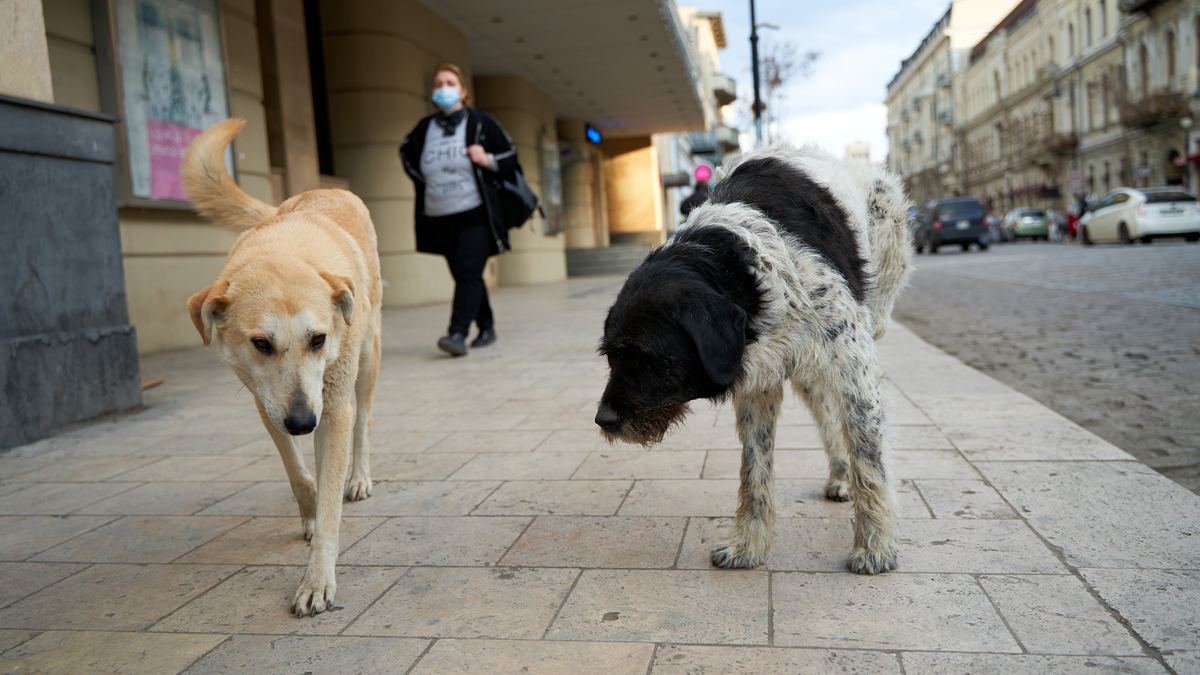
A bite from a stray dog gives you the right to compensation from the municipality, a fact most victims are unaware of. The law makes municipalities responsible for supervising and caring for stray dogs on their territory. When that duty is not fulfilled and a dog attacks a person, the courts consistently hold that the municipality is liable for the pain, fear, medical costs and lost income caused.
In this article you will learn on what legal basis compensation is claimed from the municipality, what to do in the first hours and days after the bite, what evidence you need, how much time you have and how much the case costs. We also look at the situation where the dog has an owner.
Why is the municipality liable for stray dogs?
The Animal Protection Act (Закон за защита на животните, ЗЗЖ) sets out the obligations of municipalities with regard to stray dogs. Municipal councils adopt programmes to control the stray dog population and allocate funds for carrying them out, while mayors organise the implementation of those programmes (Art. 40(2) and (3) of the Animal Protection Act). Municipalities are required to take the dogs under supervision by catching, neutering, deworming and vaccinating them against rabies and placing them in shelters (Art. 47(1)), and returning them to the places they were taken from is the exception (Art. 47(3)). The municipality must also take measures against aggressive behaviour by stray dogs (Art. 50). The framework is supplemented by Ordinance No. 4 of 2021 on the implementation of the National Programme for Controlling the Stray Dog Population.
Case law, including that of the Supreme Court of Cassation, holds that the very fact that a stray dog behaved aggressively is evidence of inaction on the part of the municipality. The burden of proving that it took adequate measures and did what was necessary within its means lies with the municipality. Producing an adopted programme is usually not enough on its own: the municipality must prove that the measures were actually carried out.
From our practice: Municipalities often defend themselves by arguing that "it has not been proved that the dog was a stray" or that "the bite did not happen at the place stated". That is why the evidence gathered in the first hours (witnesses, photographs, a report to the authorities) often decides the case.
The legal basis: Art. 49 of the Obligations and Contracts Act, not the State and Municipalities Liability Act
The courts classify these claims as civil liability under Art. 49 in conjunction with Art. 45 of the Obligations and Contracts Act (ЗЗД), i.e. the liability of a principal for damage caused by the persons to whom it has assigned work. The municipality is liable for the unlawful inaction of its employees who were tasked with supervising stray dogs, even where it cannot be established which specific employee failed to act.
This has practical consequences:
- the case is a civil one and is heard under the Civil Procedure Code, not under the State and Municipalities Liability for Damage Act (ЗОДОВ);
- the usual court fee for a claim for payment is due (see below);
- the municipality cannot escape liability by arguing that it chose its employees carefully.
This is different from disputes in which you challenge a sanction imposed by the municipality or claim damages for an unlawful administrative act; those are governed by the Administrative Violations and Sanctions Act (ЗАНН), the Administrative Procedure Code (АПК) and the State and Municipalities Liability for Damage Act. For more on those situations, see our article on appealing municipal fines, towing and wheel clamping, and for sanctions imposed by the Ministry of the Interior, our guide to appealing an electronic traffic fine from KAT.
The same principle applies to other damage caused by neglected municipal infrastructure: potholes, broken paving slabs, open manholes, fallen trees. We explain the general logic of these cases, the evidence and real amounts awarded in our article on how to sue the municipality for damage caused by poor infrastructure.
What to do immediately after the bite
- Seek medical help the same day. Go to an emergency department or to your GP. Only a doctor can decide whether rabies and tetanus prophylaxis is needed; do not delay, because these measures are effective when started in time. This article is not medical advice.
- Ask for a medical document, such as an outpatient record (амбулаторен лист) or a discharge summary (епикриза), describing the bite, the place, the date and the treatment given. This is key evidence.
- Photograph the wounds straight away and over the following days, as well as the place of the incident, the dog (if it is safe to do so) and any torn clothing.
- Write down the names and phone numbers of witnesses. Witness testimony is often the only evidence that the dog was a stray.
- Report the incident to the municipality (in Sofia, to the district administration or through the municipal contact centre) and, in the event of an attack or danger, call 112 or the police. Medical facilities also report animal bites to the health authorities.
- Keep all receipts for medicines, dressings, examinations, transport and a psychologist.
How the claim against the municipality is proved
To win against the municipality, you must prove:
- the fact of the bite: medical documents and witnesses;
- that the dog was a stray: no collar and no owner, seen in the area repeatedly, residents' reports about a pack;
- the place: it determines which municipality is liable;
- the damage and its link to the bite: medical records and, where needed, a forensic medical and psychological expert report.
Earlier reports from residents to the municipality about dogs in the same area are also useful. They show that the municipality knew about the problem. Information about them can be requested under the Access to Public Information Act or through the court.
How the case against the municipality proceeds, step by step
- Analysis of the evidence: reviewing the medical documents, photographs and witnesses, determining which municipality is liable and what amount of claim is justified. If you are still looking for a lawyer, see which questions to ask a lawyer before the case.
- Letter to the municipality (optional): some clients prefer first to propose an out-of-court settlement. Municipalities rarely pay voluntarily, but their reply sometimes shows what defence they will choose.
- Statement of claim: filed with the competent court together with the evidence and the paid court fee. It states separately the amounts claimed for non-pecuniary and for pecuniary damage.
- The municipality's response: the municipality has a deadline to respond and usually disputes the fact of the bite, the stray status of the dog and the amount of the damage.
- Taking of evidence: examination of witnesses, a medical and, where needed, psychological expert report, information from the municipality on how the dog programme was implemented in the area.
- Judgment and appeal: the judgment can be appealed to the higher court. Once it becomes final, the municipality pays the amount awarded, the interest and the costs.
In practice, the most common situation is a pedestrian or cyclist bitten in a residential neighbourhood where a pack has been present for months and residents have repeatedly reported it. It is precisely in such cases that the municipality's inaction is most convincingly proved.
What damage is compensated?
Non-pecuniary damage
This covers pain, fear, stress, sleeplessness, scarring and a lasting phobia of dogs. The compensation is set by the court on the basis of fairness (Art. 52 of the Obligations and Contracts Act), taking into account the severity of the injuries, the length of treatment, the victim's age, any lasting consequences and psychological trauma. For children and elderly people the consequences are usually more serious, and this is reflected in the amount.
Pecuniary damage
This includes the costs actually incurred: medicines, vaccines, examinations, operations, rehabilitation, transport, as well as income lost during temporary incapacity for work. These must be proved with documents.
Interest
Statutory interest is due on the compensation. In the case of a tort, the debtor is in default even without a demand (Art. 84(3) of the Obligations and Contracts Act), so interest on non-pecuniary damage is usually awarded from the date of the bite.
Contributory fault: when compensation is reduced
If the victim contributed to the damage, the court may reduce the compensation (Art. 51(2) of the Obligations and Contracts Act). Municipalities often raise this objection, for example that the victim was teasing or feeding the dogs. The municipality must prove the objection with specific facts. Simply walking along a street where there are dogs is not contributory fault.
What if the dog has an owner?
Where the bite is from a dog with a known owner, liability rests with the owner and with the person who had the animal in their care. They are jointly and severally liable under Art. 50 of the Obligations and Contracts Act for damage caused by things (which, within the meaning of the law, includes animals), regardless of fault. You do not need to prove that the owner was negligent; it is enough to prove the bite, the damage and that the dog belongs to them.
If the owner has third-party liability insurance (often as additional cover under a home insurance policy), the compensation may be paid by the insurer. You can read more about this cover in our article on home insurance and refused claims.
Deadlines, fees and which court
| Question | Answer | Legal basis |
|---|---|---|
| Limitation period | 5 years | Art. 110 of the Obligations and Contracts Act |
| Runs from | Identification of the person responsible (for a stray dog, usually the day of the bite) | Art. 114(3) of the Obligations and Contracts Act |
| Court fee | 4% of the amount claimed, minimum EUR 25.56 | Art. 1 of the Tariff of State Fees under the Civil Procedure Code |
| Exemption from the fee | Where the claimant lacks sufficient means, at the court's discretion | Art. 83(2) of the Civil Procedure Code |
| First instance | District Court (районен съд); Regional Court (окръжен съд) where the claim exceeds BGN 25,000 (about EUR 12,782) | Art. 104(4) of the Civil Procedure Code |
As a rule, the claim is brought before the court for the place where the municipality has its seat or where the damage occurred. If the victim is a child, the claim is brought in the child's name, represented by the parents.
The five-year period seems long, but evidence disappears quickly: witnesses forget, the dogs are taken away. We recommend consulting a lawyer within the first few weeks. Our civil lawyers in Bulgaria can advise you on compensation for torts.
Frequently Asked Questions (FAQ)
Can I sue the municipality if a stray dog bit me?
Yes. The courts hold that the municipality is liable under Art. 49 of the Obligations and Contracts Act, because the law makes it responsible for supervising stray dogs. The municipality can escape liability only if it proves that it took adequate measures and actually carried them out.
How much can I get for a dog bite?
There is no fixed amount. Non-pecuniary damage is set by the court on the basis of fairness, according to the severity of the injuries, the treatment and the consequences. Pecuniary damage is reimbursed according to the costs proved. A well-documented case has significantly better prospects.
What is the limitation period for a dog bite claim?
The limitation period is 5 years (Art. 110 of the Obligations and Contracts Act) and runs from the identification of the person responsible (Art. 114(3)), which for a stray dog usually coincides with the day of the bite. Do not wait until the last few months, because evidence gets lost.
Do I first have to file a complaint with the municipality?
It is not a precondition for the claim, but a report to the municipality and to the police is useful evidence of the incident and where it happened. The municipality rarely pays voluntarily, so the matter usually ends up in court.
How much does a case against the municipality cost?
The court fee is 4% of the amount claimed, but not less than EUR 25.56, plus the costs of expert reports and a lawyer. If you win, the court orders the municipality to reimburse your costs in proportion to the part of the claim upheld. We explain how to choose a litigation lawyer in our article on how to choose a good lawyer.
I was bitten by a dog with a collar, but I don't know whose it is. What should I do?
Try to identify the owner through witnesses, neighbours or the dog's microchip (with the help of the police or the municipality). If the owner is found, they are liable under Art. 50 of the Obligations and Contracts Act without fault. If not, and the dog is a stray, the municipality is liable.
Is a dog owner liable if their dog bites someone?
Yes. The owner and the person who has the dog in their care are jointly and severally liable under Art. 50 of the Obligations and Contracts Act, regardless of whether they are at fault. If they have third-party liability insurance, the compensation may be paid by the insurer; see our article on home insurance and third-party liability cover.
Is the case different from appealing a sanction imposed by the municipality?
Yes. A dog bite claim is a civil case under the Obligations and Contracts Act before the civil court, whereas an appeal against a fine or towing is an administrative dispute under the Administrative Violations and Sanctions Act or the Administrative Procedure Code. The logic is similar: the municipality is a party and is responsible for the actions of its employees. For more on administrative disputes, see our article on appealing municipal fines, and for the Ministry of the Interior, on appealing an electronic traffic fine.
Can the municipality claim that I am to blame?
It can raise an objection of contributory fault (Art. 51(2) of the Obligations and Contracts Act), for example that you were teasing the dog. The burden of proving it lies with the municipality. If the objection is upheld, the compensation is reduced proportionately.
Will they also pay for a psychologist?
Yes, if the costs are proved and are linked to the bite. Fear and anxiety after an attack are compensated as non-pecuniary damage, and where the consequences are more serious the court may appoint a psychological or psychiatric expert.
How can we help you?
Cases against municipalities for stray dog bites require evidence to be gathered quickly and a good knowledge of case law under Art. 49 of the Obligations and Contracts Act and the Animal Protection Act. The municipality usually defends itself actively, so preparation from day one is decisive.
Mechkova & Dimitrova Law Firm will assess your case, help you gather medical and witness evidence, draft the statement of claim and represent you in court. The information here is general and does not guarantee any particular outcome. Contact us to have your case reviewed while the evidence is still available.