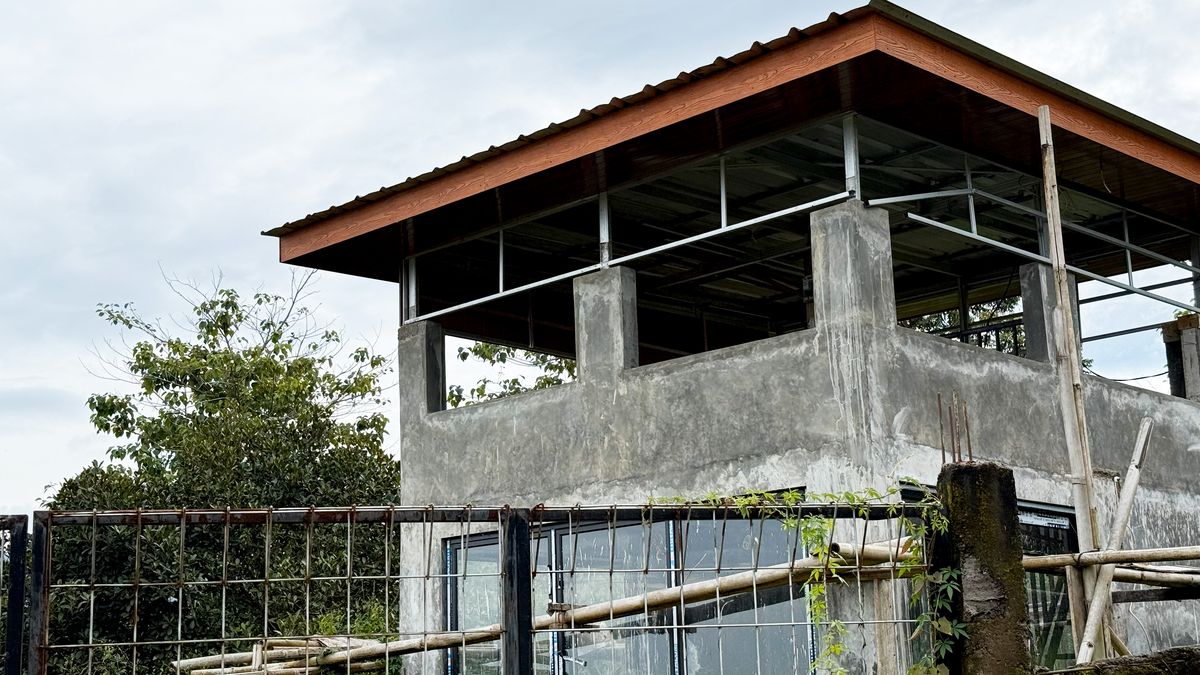
A building permit is the document without which, as a rule, you cannot lawfully build a house, extend a building or add a storey to it, or carry out major repairs affecting the structure. The Spatial Development Act (Закон за устройство на територията, ЗУТ) is categorical: construction may be carried out only if it is permitted under this Act (Art. 148(1) of the Spatial Development Act). The lack of a permit is not a formality. It makes the construction unlawful and leads to a demolition order, fines and problems when selling or obtaining a loan.
In this article you will find a practical checklist of documents, the statutory deadlines for each stage, who issues the permit, the most common reasons for refusal and how to appeal an express or tacit refusal. You will also see how long a permit is valid and when it needs to be re-validated. If you are wondering whether your small construction project needs a permit at all, see our separate article on extensions, canopies and balcony glazing.
What is a building permit and who issues it?
A building permit is an individual administrative act by which the competent authority allows the client (the person commissioning the works) to carry out a specific construction project in accordance with an approved investment project. In most cases it is issued by the chief architect of the municipality (or of the district in large cities) (Art. 148(2) of the Spatial Development Act). For certain projects the regional governor or the Minister of Regional Development and Public Works is competent, for example for projects of national importance or covering more than one municipality (Art. 148(3) of the Spatial Development Act).
The approved investment project, where one is required, is an integral part of the permit (Art. 148(8) of the Spatial Development Act). This means that you do not build "under a permit" in general, but exactly according to the approved project. Deviations from it are divided into material and non-material (Art. 154 of the Spatial Development Act), and material deviations without an approved amendment make the construction unlawful.
Categories of construction: why they matter
The Spatial Development Act divides construction into six categories according to complexity and risk (Art. 137 of the Spatial Development Act). For a private client the most important are:
- category five: low-rise residential and mixed-use buildings, holiday homes, and their reconstruction, conversion and major repairs;
- category six: construction under Art. 147 of the Spatial Development Act, for example ancillary buildings, swimming pools of up to 100 cubic metres in fenced plots, solid fences from 0.60 to 2.20 m high, retaining walls from 1.20 to 2 m.
The category determines whether an approved investment project is needed, who checks the project and who supervises the construction afterwards: the municipality (for categories IV–VI) or the Directorate for National Construction Supervision, ДНСК (for categories I–III).
When is a building permit needed, and when not?
The rule is that all construction requires a permit. The law, however, lists exceptions.
No building permit is required (Art. 151(1) of the Spatial Development Act) for, for example, routine repairs of buildings and installations, glazing of balconies and loggias, greenhouses of up to 200 sq m, light structures for storing heating materials and equipment, retaining walls of up to 1.20 m, light transparent fences and solid fences of up to 0.60 m within the plot, garden and park features of up to 2.50 m, and certain renewable energy installations for own consumption attached to single-family houses and holiday homes.
A permit, but no approval of an investment project (Art. 147(1) of the Spatial Development Act) is required for category six construction. For these, instead of a full project, a design proposal by a licensed designer is submitted (Art. 147(2) of the Spatial Development Act), and the permit is issued on the basis of the application and the title document, with a site plan attached (Art. 153(1) of the Spatial Development Act).
It is important to know what "routine repairs" means. Under the law, this is keeping the building in good repair and internal alterations that do not affect the structure, do not remove or move walls in a way that affects the structure, and do not change the use of the rooms or the loads in them (§ 5(43) of the Additional Provisions of the Spatial Development Act). Replacing floor coverings, plaster, windows and doors and sanitary fittings is usually routine repair. Cutting an opening in a load-bearing wall is not.
From our practice: If you are not sure whether the work is routine repair or construction, ask the chief architect in writing before you start. A written answer protects you from "on-the-spot" interpretation at a later inspection, and the cost of consulting a designer is incomparably lower than the cost of demolition.
The steps to a building permit
- Checking the property and the plan. Clarify ownership, what the detailed development plan (ПУП) provides for, and any restrictions: cultural heritage, easements, protected areas. If you are buying a plot to build on, this check should be part of the legal due diligence before buying the property.
- Design visa (виза за проектиране). The visa is an extract from the detailed development plan showing the building lines, the permitted heights, density and intensity (Art. 140(2) of the Spatial Development Act). It is mandatory in the cases expressly listed in the law (Art. 140(3) of the Spatial Development Act) and optional for the client in all other cases. It is issued within one month of the application (Art. 140(7) of the Spatial Development Act).
- Baseline data from the utility companies: for connection to the water supply, sewerage and electricity distribution network.
- Investment project. Prepared by licensed designers for all necessary parts.
- Compliance assessment. For low-rise residential buildings, the assessment is usually carried out by the municipality's expert council, and for projects of categories one to five outside these cases, by a comprehensive report from a licensed consultant (Art. 142(6) of the Spatial Development Act).
- Coordination and approval of the project by the chief architect.
- Issue of the building permit. You may ask for the permit to be issued at the same time as the project is approved (Art. 148(4) of the Spatial Development Act).
- Entry into force and start of construction. The permit is notified to the interested parties and may be appealed. Construction begins with a protocol opening the construction site and setting the building line and level (Art. 157(1) of the Spatial Development Act).
Checklist: documents for a building permit
The following are submitted with the application for approval of the project (Art. 144(1) of the Spatial Development Act):
- title document or document establishing a right to build;
- design visa, or a document with baseline data from the utility companies where no visa has been requested;
- investment project: two paper copies and one electronic copy;
- details of final acts under environmental legislation, the Cultural Heritage Act or another special law, where required for the specific construction;
- compliance assessment, where prepared by a consultant;
- a positive opinion from the fire safety authorities, for construction of categories one to three;
- other opinions and permits depending on the type of project (for example a permit under the Water Act).
Some of these documents and data are obtained ex officio by the administration on the basis of identification details you provide (Art. 144(7) of the Spatial Development Act).
Additional documents depending on the case:
- co-owned property: a notarised contract with the other co-owners for the new construction, extension or additional storey (Art. 183(1) of the Spatial Development Act), except in the exceptions under Art. 183(4) of the Spatial Development Act;
- extending or adding a storey to a building in condominium ownership: a contract establishing a right to build with the owner of the land, and a declaration of consent with notarised signatures from all owners in the condominium (Art. 183(2) of the Spatial Development Act);
- construction affecting the structure of an existing building: a survey of the building under Art. 176v of the Spatial Development Act (Art. 148(13) of the Spatial Development Act);
- trees on the property: a permit to remove them, where the construction affects them (Art. 148(12) of the Spatial Development Act).
Fees under the State Fees Act and the Local Taxes and Fees Act are payable for coordination, approval and issue of a permit (Art. 144(8) of the Spatial Development Act). Their amount is set by an ordinance of the municipal council concerned and differs between municipalities.
Deadlines: how long does a building permit take?
The law sets the deadlines for the administration, but these do not include the time for design, for opinions and for remedying deficiencies.
| Stage | Statutory deadline | Legal basis |
|---|---|---|
| Design visa | 1 month from the application | Art. 140(7) of the Spatial Development Act |
| Approval of a project with a comprehensive consultant's report | 14 days from submission | Art. 144(3)(1) of the Spatial Development Act |
| Approval of a project with an expert council assessment | 1 month from submission | Art. 144(3)(2) of the Spatial Development Act |
| Building permit where the project is already approved | 7 days from the application | Art. 148(4) of the Spatial Development Act |
| Ex officio legality review by ДНСК | 14 days from its notification | Art. 156(1) of the Spatial Development Act |
| Appeal against the permit or an express refusal | 14 days from notification | Art. 215(4) of the Spatial Development Act |
| Appeal against a tacit refusal | 2 months from the expiry of the deadline for a decision | Art. 149(2) of the Administrative Procedure Code |
Also pay attention to the validity of the project itself: if you do not apply for a building permit within one year of its approval, the project ceases to have legal effect (Art. 145(4) of the Spatial Development Act).
The most common reasons for refusal
A refusal may be made only on grounds of legality and must state specific reasons (Art. 146 and Art. 149(1) of the Spatial Development Act). This means that the municipality cannot refuse on grounds of expediency, for example because it "does not like" the architecture, if the project complies with the plan and the standards. Refusals are most often based on:
- Non-compliance with the detailed development plan: exceeded height, density or intensity of development, a building outside the building lines.
- Breached distances to plot boundaries and neighbouring buildings.
- Incomplete or defective documents: a missing title document, unsigned parts of the project, missing opinions.
- Lack of consent of co-owners or of the owners in the condominium, where the law requires it.
- Unlawful construction on the same property. A permit for new construction is not issued to a person who has carried out unlawful construction on the property until it has been demolished or legalised (Art. 148(7) of the Spatial Development Act).
- Restrictions under special laws: cultural heritage, protected areas, sanitary protection zones, water.
- No parking spaces provided on the plot for new buildings, unless the authority allows an exception (Art. 43 of the Spatial Development Act).
A common feature of most refusals is that they could have been foreseen. Checking the plan and the ownership before the design stage saves months.
How to appeal a refusal or a tacit refusal
Express refusal
A refusal to issue a building permit is appealed before the administrative court for the place where the property is located (Art. 215(1) of the Spatial Development Act). The appeal is filed through the authority that issued the refusal, within 14 days of notification (Art. 215(4) of the Spatial Development Act). The deadlines are short and cannot be extended, so it is best to analyse the reasons straight away.
The court checks whether the refusal is lawful: whether it was issued by the competent authority, in the correct form, following the procedure and in accordance with substantive law. If it annuls the refusal, the court usually returns the file to the authority with instructions for a decision.
Tacit refusal
When the chief architect fails to decide within the statutory deadline, the failure to decide is deemed a tacit refusal (Art. 58(1) of the Administrative Procedure Code). A tacit refusal can also be appealed before the administrative court. The deadline is two months from the expiry of the period in which the authority was obliged to decide (Art. 149(2) of the Administrative Procedure Code, as in force from 3 September 2025).
Practical steps when the administration stays silent:
- Keep the reference number and date of your application.
- Calculate when the deadline for a decision expires (for example 7 days where the project is already approved).
- Send a written reminder: it is not mandatory, but it sometimes speeds up the procedure.
- If there is no answer, file an appeal against the tacit refusal within the two-month deadline.
If the authority issues an express refusal in the meantime, watch out for the separate 14-day deadline for appealing it.
When a neighbour appeals your permit
The permit is notified to the interested parties: for new construction, an extension or an additional storey, these are the client, the owners and the holders of limited rights in rem in the plot (Art. 149(2)(1) of the Spatial Development Act), and for conversions within a building, the relevant owners under Art. 149(2)(2)–(4) of the Spatial Development Act. They may appeal it within 14 days. For a new build, the owner of a neighbouring plot is not among them and as a rule cannot appeal the permit, but can report it to ДНСК (Art. 156(1) and (5) of the Spatial Development Act). That is why you should not start construction before the permit has become final. Final building permits cannot be revoked (Art. 156(8) of the Spatial Development Act).
For appealing other acts of the municipality, such as fines, see our article on appealing municipal fines.
How long is a permit valid and when must it be re-validated?
A building permit ceases to have legal effect when (Art. 153(2) of the Spatial Development Act):
- construction has not started within 3 years of its entry into force;
- the shell construction, including the roof, has not been completed within 5 years of the start.
You may apply for re-validation within three months of the expiry of the relevant period (Art. 153(4) of the Spatial Development Act). Re-validation is possible only once (Art. 153(5) of the Spatial Development Act), and the fee is 50% of the fee for issuing the permit (Art. 153(8) of the Spatial Development Act). If the re-validated permit also expires, the approved project also ceases to have effect (Art. 153(10) of the Spatial Development Act).
This is particularly important if you are buying a property under construction: check whether the permit is valid and whether the shell construction was completed on time. You will find more about the risks of such a purchase in our article on buying off-plan property.
What do you risk when building without a permit?
Construction without approved investment projects and/or without a building permit is unlawful (Art. 225(2)(2) of the Spatial Development Act). The same applies to material deviations from the project and non-compliance with the plan. The consequences are:
- a demolition order: from the mayor of the municipality for construction of categories four to six (Art. 225a of the Spatial Development Act) or from ДНСК for categories one to three (Art. 225 of the Spatial Development Act); if it is not complied with, demolition is enforced at the expense of the perpetrator and the client;
- a fine of BGN 1,000 to 10,000 (approx. EUR 511–5,113) for a participant in the construction who carries out, orders or allows unlawful construction (Art. 232(2) of the Spatial Development Act), and higher financial penalties for companies;
- refusal of a new permit on the property until the unlawful construction has been demolished or legalised (Art. 148(7) of the Spatial Development Act);
- difficulties with sale, mortgage and connection to utility networks.
The options for "legalising" old construction are limited. The law recognises as tolerated construction built without building documents before 31 March 2001, if it was permissible under the rules in force at the time it was built or under the current rules (§ 127(1) of the Transitional and Final Provisions of the Act amending and supplementing the Spatial Development Act, State Gazette No. 82/2012). For more recent unlawful construction there is no general legalisation procedure, which is why the permit must be issued before you start. We look at the three possible paths (legalisation, tolerance or demolition) in detail in our guide to illegal construction.
Frequently Asked Questions (FAQ)
Who issues a building permit?
As a rule, the chief architect of the municipality or of the district (Art. 148(2) of the Spatial Development Act). For certain projects, the regional governor or the Minister of Regional Development and Public Works. The competent authority depends on the type and significance of the construction.
What documents do I need for a building permit for a house?
The main ones are a title document, a design visa or baseline data, the investment project, a compliance assessment and the opinions under special laws (Art. 144(1) of the Spatial Development Act). For co-owned property, a notarised contract with the co-owners is also required. Before buying the plot, it is advisable to carry out legal due diligence on the property.
How long does it take to get a building permit?
The statutory deadlines for the administration are relatively short, for example 7 days for a permit where the project is already approved (Art. 148(4) of the Spatial Development Act). The overall duration, however, depends mostly on the design, the opinions and dealing with comments, so in reality the procedure takes anywhere from a few weeks to a few months.
Do I need a permit for an extension, a canopy or balcony glazing?
An extension as a rule requires a permit and an approved project; glazing of balconies and loggias does not require a permit (Art. 151(1)(6) of the Spatial Development Act); and for a canopy it depends on its type and size. You will find a detailed list in our article extension, canopy, glazing: when do you need a permit.
What is a tacit refusal and how is it appealed?
A tacit refusal arises when the authority fails to decide within the statutory deadline (Art. 58(1) of the Administrative Procedure Code). It is appealed before the administrative court within two months of the expiry of the deadline for a decision (Art. 149(2) of the Administrative Procedure Code). Keep the reference number and date of your application so that you can calculate the deadline precisely.
What is the deadline for appealing an express refusal?
14 days from notification, by an appeal filed through the authority that issued the refusal to the administrative court for the place where the property is located (Art. 215(1) and (4) of the Spatial Development Act). The deadline is preclusive: missing it usually means that the refusal becomes final.
Can a neighbour appeal my building permit?
As a rule, not for a new build, an extension or an additional storey. In those cases the only interested parties are the client, the owners and the holders of limited rights in rem in the same plot (Art. 149(2)(1) of the Spatial Development Act); the owner of the neighbouring plot is not among them. For conversions and the other cases under Art. 149(2)(2)–(4) of the Spatial Development Act the circle is wider, and the interested parties may appeal within 14 days of notification. A neighbour can report the permit to ДНСК, which reviews its lawfulness (Art. 156(1) and (5) of the Spatial Development Act), and can object to reduced setbacks when the detailed development plan (ПУП) is approved (Art. 131(2)(3) of the Spatial Development Act). In any case, you should not start construction before the permit has become final.
How long is a building permit valid?
It ceases to have effect if construction does not start within 3 years of its entry into force, or if the shell construction is not completed within 5 years of the start (Art. 153(2) of the Spatial Development Act). It can be re-validated once, with the application filed within 3 months of the expiry of the period.
What happens if I build without a permit?
The construction is unlawful and liable to demolition by order of the mayor or ДНСК (Art. 225 and 225a of the Spatial Development Act), and those involved in the construction are liable to fines. Unlawful construction also causes problems on sale: the buyer and the bank usually discover it during their checks. We explain how to choose a lawyer for such a dispute in our article on how to choose a good lawyer.
Do I need a permit for major roof repairs?
It depends on the scope of the work. Routine repairs do not require a permit, but reconstruction or major repairs of a roof do. For the roofs of low-rise residential buildings on private plots, the law allows a permit without an approved investment project under certain conditions (Art. 147(1)(3) of the Spatial Development Act). For the roof of an apartment block, see our article on roof and facade repairs in condominium ownership.
What should I check if I am buying a home under construction?
Whether there is a final building permit, whether it is valid, whether the construction complies with the approved project and what stage it has reached. Also review the contract with the developer. We cover this topic in detail in our article on off-plan property: safeguards and risks.
How can we help you?
The building permit procedure looks technical, but the most expensive mistakes in it are legal ones: unresolved ownership, missing consent from a co-owner or the condominium, a missed appeal deadline. Good preparation before the design stage usually saves more time than any subsequent appeal.
Mechkova & Dimitrova Law Firm will check the ownership and the plan for your property, prepare the necessary contracts and consents, and appeal an express or tacit refusal before the administrative court. Find out more about our planning and building permit lawyers. The information in this article is general and does not replace advice on your specific case. Contact us to have your project reviewed.