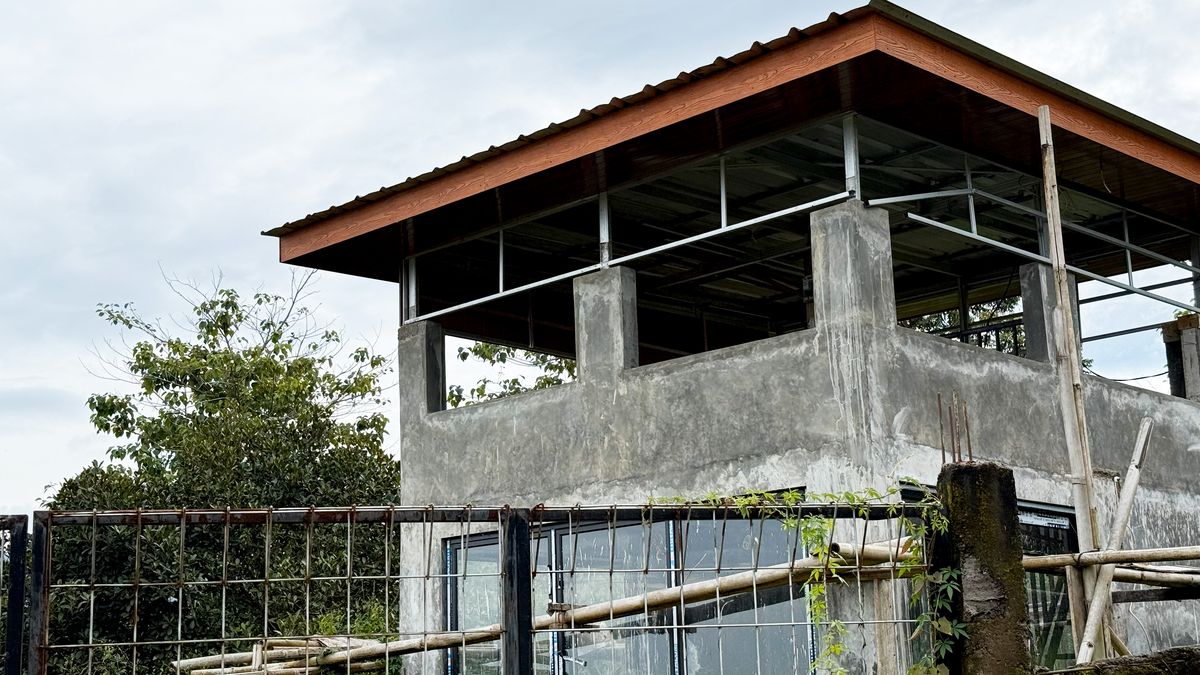
Illegal construction is one of the most common property problems in Bulgaria: an extension to a holiday home, an additional storey, an enclosed terrace with a new structure, a garage in the yard built "temporarily" twenty years ago. Owners usually find out that the building is illegal only when a statement of findings (констативен акт) arrives from the municipality, when a neighbour files a complaint, or when the buyer and the bank refuse to go ahead with the transaction. The question is then always the same: can the building be legalised, is it tolerated, or will it be demolished?
The answer depends above all on when the building was built and whether it was permissible under the plan and the rules. In this guide we explain the three paths under the Spatial Development Act (ЗУТ) (legalisation, tolerance and demolition) and which deadlines have expired over the years. We also explain something most sources leave out: what you can still do if the building was built after 2001 and the deadlines under § 127 and § 184 expired long ago. If you are only now planning to build, start with our article on the building permit: documents, deadlines and refusals.
When is a building illegal?
The Spatial Development Act lists exhaustively when a building or part of it is illegal (Art. 225(2) of the Spatial Development Act). It is a building that is being carried out:
- in breach of the detailed development plan (ПУП) in force;
- without approved investment designs and/or without a building permit;
- with material deviations from the approved design under Art. 154(2), items 1–4 of the Spatial Development Act: a breach of the detailed development plan, a breach of the requirements in protected areas, incompatibility with the designated use of the area, or a breach of building, sanitary, environmental and fire safety rules;
- with unsuitable construction products or in breach of the rules on execution, where this affects structural safety and bringing it into compliance is impossible;
- where there is a final refusal to issue an act under Art. 142(5), item 8 of the Spatial Development Act;
- in breach of the requirements in areas with special or preventive planning protection.
Note item 3. Not every deviation from the design makes a building illegal. Non-material deviations, meaning all those not listed in Art. 154(2) of the Spatial Development Act, are not grounds for demolition (Art. 154(3) of the Spatial Development Act). And some works do not require a permit at all. So the first question is always whether the building really is illegal. You will find a list of the most common small structures and whether they require a permit in our article extension, canopy, glazing: when you need a permit.
Who supervises and who issues the order
For buildings of the fourth to sixth category (houses, holiday homes, extensions, garages, fences), the demolition order is issued by the mayor of the municipality or of the district (Art. 225a(1) of the Spatial Development Act). For buildings of the first to third category, the competent authority is the head of the Directorate for National Construction Control (ДНСК) (Art. 225(1) of the Spatial Development Act). The wrong authority is a ground in itself for annulling the order, which is why the category of the building also matters in court.
The three paths: legalisation, tolerance, demolition
| Period of construction | Possible status | Deadline for action | Legal basis |
|---|---|---|---|
| before 7 April 1987 | tolerated building, if it was permissible | no deadline: certificate when needed | § 16(1) of the Transitional Provisions of the Spatial Development Act |
| 8 April 1987 – 30 June 1998 | not demolished, if permissible and declared | declaration by 31.12.1998: expired | § 16(2) of the Transitional Provisions of the Spatial Development Act |
| before 31 March 2001 | tolerated building, if it was permissible | no deadline: certificate when needed | § 127(1) of the Transitional and Final Provisions of the 2012 amending Act (State Gazette No. 82/2012) |
| before the 2003 amending Act came into force | legalisation, if permissible | 6 months: expired | § 184 of the Transitional and Final Provisions of the 2003 amending Act (State Gazette No. 65/2003) |
| buildings under § 184 not applied for by then | legalisation, if permissible | application by 26.11.2013: expired | § 127(2)–(3) of the Transitional and Final Provisions of the 2012 amending Act (State Gazette No. 82/2012) |
| after that | no general legalisation procedure | – | Art. 225 and 225a of the Spatial Development Act |
In other words: tolerance is not tied to a deadline for filing an application, whereas legalisation was, and all those deadlines have expired.
Legalisation: what § 184 and § 127 provided and why they no longer apply
Until 2003 the Spatial Development Act allowed illegal buildings to be legalised. The Act amending and supplementing the Spatial Development Act, published in State Gazette No. 65 of 2003, abolished this general procedure. Its transitional § 184 gave a last chance: buildings carried out illegally before it came into force could be legalised if they were permissible under the rules at the time of construction or under the current rules. The application had to be filed within 6 months of the Act coming into force (§ 184(2)).
With the Act amending and supplementing the Spatial Development Act in State Gazette No. 82 of 2012 (in force from 26.11.2012), the legislature opened a new, also temporary, window. Buildings under § 184 that had not been applied for could be legalised on an application filed within one year of its entry into force, i.e. by 26.11.2013 (§ 127(2) and (3) of the Transitional and Final Provisions of the 2012 amending Act). The proceedings had to be completed within two years (§ 127(14)), and buildings that were not applied for, or for which there was a final refusal, are demolished under Art. 225 and 225a of the Spatial Development Act (§ 127(15)).
Legalisation under these provisions consisted of approving an as-built survey design (проект-заснемане), bringing the building into line with it, paying fines and fees, and issuing an act of legalisation (акт за узаконяване). If you filed an application at the time and received such an act, it is the document that proves the building is lawful. Look for it in the municipality's archive.
The rule in Art. 134(4), item 1 of the Spatial Development Act is also important: detailed development plans in force cannot be amended for the purpose of legalising illegally built buildings. "We'll change the plan and it will become legal" is not a legal solution.
From our practice: Reports of a "new amnesty" for illegal construction appear in the media from time to time. Until such a change is adopted and published, it does not protect you. Do not put off your objections and appeals while waiting for a law that may never come.
Tolerated buildings: which they are and how tolerance is proved
Tolerance is different from legalisation. It does not make the building lawful in the full sense, but it means that the building is not subject to demolition or a ban on use and can be the subject of a transfer transaction (§ 16(1) of the Transitional Provisions of the Spatial Development Act and § 127(1) of the Transitional and Final Provisions of the 2012 amending Act).
Conditions for tolerance
- Period. The building was built before 7 April 1987 (§ 16(1)) or before 31 March 2001 (§ 127(1)).
- No building documents. If there are building documents, the building is lawful and tolerance is not needed.
- Permissibility. The building was permissible under the provisions in force when it was built or under the current ones. What is checked is the designated use of the land, the development permitted by the plan, the distances to boundaries and the standards.
The practical difficulty is usually proving the year of construction. Old cadastral plans, orthophoto images, electricity and water supply contracts, tax returns, notarial deeds in which the building is described, and witness statements all help. The earlier the evidence is gathered, the better.
Certificate of tolerance
The certificate is issued by the authority empowered to approve investment designs for the building in question; for most private properties this is the chief architect of the municipality or of the district. An as-built survey of the building and evidence of the period of construction are usually required; the specific list is set by the municipality, so check the requirements locally. The certificate is needed for a sale, a gift and other transfer transactions, and in practice it is also requested for a division of property.
What can be done with a tolerated building
Tolerated buildings that have permanent planning status under the detailed development plan in force can be extended, have storeys added, be repaired and be altered after an as-built survey design and a building permit under the general procedure. If they do not have such status, only internal alterations, a change of use and repairs without changing the external volume and without new or reinforced load-bearing structures are allowed (§ 53 of the Transitional and Final Provisions of the Act amending and supplementing the Spatial Development Act, State Gazette No. 101/2015).
If a tolerated building is expropriated for public needs, the owner is owed compensation under the general procedure (§ 16(4) of the Transitional Provisions of the Spatial Development Act and § 127(13) of the Transitional and Final Provisions of the 2012 amending Act). We explain how expropriation works in our article on expropriation of property and compensation.
A building built after 2001: what is still possible
Most articles stop here: "the deadlines have expired, there is nothing to be done". In practice, for a building built after 31 March 2001, several legal routes remain that you should check before accepting demolition.
- The building may not require a permit at all. If the works fall under Art. 151(1) of the Spatial Development Act (for example, glazing a balcony, a light structure for storing tools, garden features up to 2.50 m), they are not illegal for lack of a permit.
- The deviation may be non-material. Deviations not listed in Art. 154(2) of the Spatial Development Act do not make a building illegal. A well-reasoned opinion from a designer often settles the dispute.
- The building documents may exist but have been lost. If the approved design has been lost, the owner can restore it with an as-built survey design approved by the competent authority after presenting the building permit or other building documents (Art. 145(5) of the Spatial Development Act). Search the archives of the municipality, the designer and the previous owner.
- There may be an old act of legalisation or a declaration. Check whether a previous owner filed an application under § 184 or under § 127(2), or a declaration under § 16(2)–(3) of the Transitional Provisions of the Spatial Development Act.
- The building may be older than it looks. If the main part was built before 31 March 2001 and was only repaired later, it may be tolerated. Newer extensions, however, are assessed separately.
- Demolition of the illegal part only. The order may concern part of the building (Art. 225a(1) of the Spatial Development Act). Sometimes voluntarily demolishing one extension saves the rest of the building and opens the way to a new permit.
- Challenging the lawfulness of the order. The wrong category and an incompetent authority, an inaccurate description of the building, the wrong addressee, a statement of findings that was not served, or objections that were not examined are common grounds for annulment.
The last point is not a "loophole". If the building is illegal in substance, an annulled order is usually issued again once the authority has remedied the defects. But the time gained often makes it possible to gather evidence of tolerance or to resolve the matter in another way.
The demolition procedure and how to defend yourself
- Inspection and statement of findings. The municipality's building control officers establish the building and draw up a statement of findings (Art. 223(2) and Art. 225a(2) of the Spatial Development Act).
- Objections within 7 days. The statement is served on the interested parties, who can file objections within 7 days (Art. 225a(2) of the Spatial Development Act). This is the cheapest and often the most important moment for your defence: attach documents, photographs, a designer's opinion and evidence of the year of construction.
- Demolition order. It is issued by the mayor (for categories IV–VI) or by the Directorate for National Construction Control (for categories I–III) and is published in the Unified Public Register for Spatial Development.
- An appeal within 14 days. The order is appealed before the administrative court where the property is located, by an appeal filed through the authority, within 14 days of notification (Art. 215(1) and (4) of the Spatial Development Act). Work out the deadlines with our deadline calculator, but leave yourself a margin too.
- Enforcement. The law does not include demolition orders in the list of acts whose enforcement is not suspended by an appeal (Art. 217(1) of the Spatial Development Act), so as a rule an appeal suspends enforcement. The authority may, however, allow preliminary enforcement; check whether the order contains such a direction. How to ask the court to stay preliminary enforcement is explained in our article on the demolition order: deadlines, appeal and suspension.
- Compulsory demolition. If the order is not complied with voluntarily, the municipality or the Directorate for National Construction Control demolishes the building compulsorily (Art. 225a(3) and Art. 225(4) of the Spatial Development Act). The costs are collected on the basis of an order for immediate enforcement under Art. 418 of the Civil Procedure Code (ГПК) (Art. 225a(4) of the Spatial Development Act) and are borne by the person who carried out the works, the client and, in some cases, the builder, the supervisor and the designer, who are jointly and severally liable (Art. 225a(5) and (6) of the Spatial Development Act).
Separately from demolition, a participant in the construction who carries out, orders or allows illegal construction is punished with a fine of EUR 511.29 to EUR 5,112.92 (BGN 1,000–10,000, as stated in the law), unless a heavier penalty is provided for by another law (Art. 232(2) of the Spatial Development Act). We explain how to challenge the penalty decree itself in our article on the statement of offence and the penalty decree.
If the order is annulled by the court but the building has already been demolished under preliminary enforcement, compensation can be claimed from the municipality or the state under the State and Municipalities Liability for Damage Act; see our article on claims under the State and Municipalities Liability for Damage Act for details.
From our practice: When they receive a statement of findings, clients often lose the seven days in conversations with the municipality. The objection is in writing, and anything you have not stated in it is later hard to prove in court. Seek advice on the very day it is served.
Illegal construction when buying, selling and inheriting
When buying. The sale of a property with an illegal extension is not expressly prohibited, but the risk passes to the buyer: they may receive a demolition order, and the bank usually refuses a mortgage loan. So compare the actual condition of the property with the approved designs, the cadastral map and the title document. We describe how such a check is done in our article on legal due diligence before buying a property, and the fees and checks at the notary in our article on the notary deed.
With new construction. If you are buying an off-plan apartment, check whether the building is being built according to the approved design and whether additional storeys, attics or parking spaces are included in the permit. More in our article on buying off-plan: risks and safeguards.
When inheriting and dividing property. An illegal extension built by one of the heirs often complicates the division. A tolerated building can be included in the division, and a certificate of tolerance is usually required. More in our article on dividing an inheritance.
A new building on the same property. Until the illegal building is demolished or legalised, the person who built it will not be issued a permit for a new building on the property (Art. 148(7) of the Spatial Development Act).
Frequently Asked Questions (FAQ)
Can an illegal building be legalised today?
There is no general legalisation procedure. The last deadline for applications under § 127(2)–(3) of the Transitional and Final Provisions of the 2012 amending Act expired on 26.11.2013. What remains is tolerance for buildings built before 31 March 2001 and proving that the building is not actually illegal.
Which buildings are tolerated?
A building built without permits before 31 March 2001 (or before 7 April 1987 under § 16 of the Transitional Provisions of the Spatial Development Act), if it was permissible under the rules at the time it was built or under the current ones. A tolerated building is not subject to demolition and can be sold once a certificate of tolerance is presented.
Is there a deadline for a certificate of tolerance?
The law sets no deadline for the request. The certificate is requested when it is needed: for a sale, a division, new construction or an inspection by the municipality. The sooner you gather evidence of the year of construction, the easier it is.
How do you prove when the building was built?
With documents such as old cadastral plans, orthophoto images, contracts with electricity and water suppliers, tax returns and notarial deeds, and with witnesses. The municipality and the court assess the evidence as a whole, so a single piece of evidence is rarely enough.
What should I do if I receive a statement of findings?
File written objections within the 7-day deadline (Art. 225a(2) of the Spatial Development Act) and attach all the documents. Check whether the building requires a permit at all; there is a list in our article extension, canopy, glazing.
What is the deadline for appealing a demolition order?
14 days from notification, before the administrative court where the property is located, by an appeal filed through the authority that issued the order (Art. 215(1) and (4) of the Spatial Development Act). A missed deadline usually means that the order becomes final.
Can the plan be changed so that the building becomes lawful?
No. Detailed development plans in force cannot be amended for the purpose of legalising illegal buildings (Art. 134(4), item 1 of the Spatial Development Act).
What is the fine for illegal construction?
For a participant in the construction who carries out, orders or allows illegal construction: from EUR 511.29 to EUR 5,112.92 (BGN 1,000–10,000) under Art. 232(2) of the Spatial Development Act, unless a heavier penalty applies. In addition, the building is subject to demolition at the expense of the person who carried out the works and of the client.
Can I get a permit for a new extension if there is an illegal building on the property?
The person who built the illegal building cannot obtain a permit for a new building on the property until the illegal one is demolished or legalised (Art. 148(7) of the Spatial Development Act). The permit procedure is described in our article building permit: documents and deadlines.
Is it safe to buy a house with an illegal extension?
The risk of a demolition order passes to you, and banks usually do not lend on such a property. Before the transaction, check whether the extension is tolerated or lawful; see legal due diligence before buying a property.
What if my neighbour has built illegally next to my property?
You can file a written complaint with the municipality (for categories IV–VI) or with the Directorate for National Construction Control (for categories I–III). If the building prevents you from using your property, a civil claim is also possible. We explain how to choose a lawyer for such a dispute in our article how to choose a good lawyer.
How can we help you?
With illegal construction, the outcome rarely depends only on "is there a permit". What decides it is the year of construction, permissibility under the plan, the quality of the evidence and whether you reacted within the seven-day and fourteen-day deadlines. A timely check of the documents and archives often reveals a path that is not visible at first glance.
Mechkova & Dimitrova Law Firm will review the documents and history of the building, prepare the objections against the statement of findings and the appeal against the demolition order, assist with obtaining a certificate of tolerance and defend you before the administrative court. If you are looking for an illegal construction lawyer in Sofia, see more about our practice. The information in this article is general and is not a substitute for advice on your specific case. Contact us for a review of your building.