Suing the state or a municipality for damages is possible and not unusual. The Constitution proclaims that the state is liable for damage caused by unlawful acts or actions of its authorities and officials (Art. 7 of the Constitution), and the State and Municipalities Liability for Damage Act (ЗОДОВ, often transliterated as ZODOV) sets out exactly how this works. People, however, often give up in advance, because they believe that "you cannot win against the state", or because they do not know whether their case falls under the ZODOV, under the general civil rules, or cannot be brought at all.
In this guide you will learn when the ZODOV applies and when it does not, the difference between claims under Art. 1 and under Art. 2, why the act usually has to be annulled first, who the right defendant is, before which court the claim is filed, how much it costs and what the deadline is. You will also see the most common situations from practice, with links to our detailed articles.
What is the ZODOV and why is it favourable to the injured party
The ZODOV is a special law on the liability of the state and the municipalities. It has three important advantages over an ordinary claim for compensation:
- Fault does not have to be proven. The state and the municipalities owe compensation for all pecuniary and non-pecuniary damage that is a direct and immediate consequence of the harm, regardless of whether the official acted with fault (Art. 4(1) of the ZODOV).
- The fee is symbolic. You do not pay 4% of the value of the claim, but a simple fee of a few euro (see the section on fees).
- Costs are not paid in advance (Art. 9a(2) of the ZODOV).
The other side of the coin: where the ZODOV applies, compensation is claimed only under this law, and not under the general procedure (Art. 8(1) of the ZODOV). And where a special law provides its own means of compensation, the ZODOV does not apply (Art. 8(4) of the ZODOV).
Article 1 or Article 2: the two main types of claim
The law divides liability into two large groups. This determines which court hears the case and under which procedural law.
| Art. 1 of the ZODOV | Art. 2 of the ZODOV | |
|---|---|---|
| For what | Unlawful acts, actions and omissions in administrative activity | Actions of the investigating authorities, the prosecution and the court in listed cases |
| Examples | An unlawful refusal of a permit, an annulled order, towing (the "паяк") without grounds, an unlawful omission | Unlawful detention, a charge followed by acquittal, a sentence served beyond the set term |
| Who is liable | The state or the municipality | The state |
| Court | The administrative court | The district or regional court |
| Procedure | Administrative Procedure Code (Art. 1(3) of the ZODOV) | Civil Procedure Code (Art. 2(3) of the ZODOV) |
Art. 1: damage caused by the administration
The state and the municipalities are liable for damage caused by unlawful acts, actions or omissions of their authorities and officials in or in connection with the performance of administrative activity. Liability also covers damage caused by secondary legislation that has been annulled as unlawful or declared null and void, for example an ordinance of the municipal council (Art. 1(1) of the ZODOV).
Since 3 September 2025 the law has expressly provided that the state is also liable for damage caused by failure to issue a document within the period set by the court under Art. 174 of the Administrative Procedure Code (Art. 1(2) of the ZODOV). This is the situation where you have won a case, the court has ordered the administration to issue you a document, and it continues to delay.
Art. 2: damage caused by the investigating authorities, the prosecution and the court
The state is liable in an exhaustive list of cases, which include (Art. 2(1) of the ZODOV):
- detention in custody or house arrest, where the measure is revoked, and any other deprivation of liberty in breach of the European Convention on Human Rights;
- a charge of a crime, if the person is acquitted or the proceedings are terminated because the act was not committed by them or is not a crime;
- serving a sentence beyond the set term or amount;
- unlawful use of special intelligence means;
- disclosure of investigation materials or public statements in breach of the presumption of innocence.
In 2026 the law was supplemented: the state is also liable where an official publicly expresses the opinion that someone is guilty, in breach of the presumption of innocence (Art. 2g of the ZODOV).
Other special cases
- Slow justice: damage caused by a breach of the right to have the case decided within a reasonable time (Art. 2b of the ZODOV). For completed proceedings, you must first go through the administrative procedure under the Judiciary Act (Art. 8(2) of the ZODOV).
- Breach of EU law: the claims are heard under the Administrative Procedure Code or the Civil Procedure Code, depending on who caused the damage (Art. 2v of the ZODOV).
When the ZODOV does NOT apply: the municipality as owner
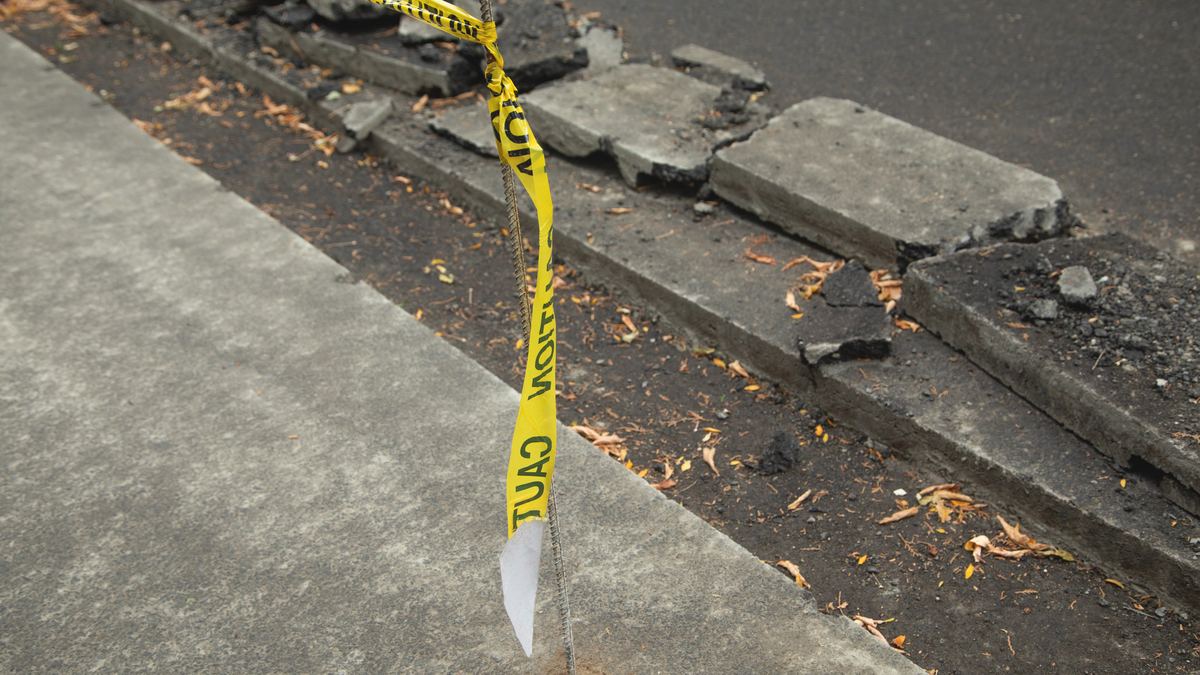
This is the most common misunderstanding. When the municipality maintains streets, pavements, parks and trees, it acts as an owner, not as a public authority. So damage caused by a pothole in the road, a broken paving slab, an open manhole or a fallen branch is not claimed under the ZODOV, but with a civil claim under Art. 49 in conjunction with Art. 45 of the Obligations and Contracts Act (ЗЗД). This was also confirmed in the joint Interpretative Decision No. 2/2014 of the Supreme Court of Cassation (ВКС) and the Supreme Administrative Court (ВАС), according to which claims for damage caused by transport and communication networks and facilities owned by the state and the municipalities are heard by the civil courts.
The difference has practical significance:
| ZODOV (Art. 1) | Obligations and Contracts Act (Art. 49) | |
|---|---|---|
| When | Public authority: an act, a refusal, a measure, an omission of an authority | Ownership: maintenance of roads, pavements, trees |
| Court | Administrative | District or regional (civil) |
| State fee | EUR 5.11 for individuals | 4% of the value of the claim, minimum EUR 25.56 |
| Prior annulment of an act | As a rule, yes | No |
If you have been injured because of poor infrastructure, see our detailed guide how to sue the municipality for damage caused by a pothole, a paving slab, a manhole or a tree.
The ZODOV also does not apply where another law provides its own compensation. This is the case with expropriation of property: the amount of compensation is challenged by an appeal against the expropriation order, not by a claim under the ZODOV. We explain how this works in our article expropriation of property: compensation, deadlines and appeals.
First annulment of the act, then compensation
For damage caused by administrative acts, the rule is clear: the claim may be brought after the act has been annulled under the relevant procedure (Art. 204(1) of the Administrative Procedure Code). The court hearing the claim cannot itself assess the lawfulness of an act that has not been annulled.
There are, however, three important clarifications:
- The claim can be joined to the appeal. You can bring the claim for compensation together with the challenge to the act, up to the end of the first hearing in the case (Art. 204(2) of the Administrative Procedure Code). If this complicates the case, the court may separate the claim and examine it after the decision on annulment (Art. 206 of the Administrative Procedure Code).
- A null and void or withdrawn act. Where the damage was caused by a null and void or a withdrawn act, its unlawfulness is established by the court before which the claim is brought (Art. 204(3) of the Administrative Procedure Code).
- Actions and omissions. Here too no prior proceedings are needed: the unlawfulness of the action or omission is established by the court hearing the claim (Art. 204(4) of the Administrative Procedure Code).
This is why the first step is usually the appeal. Administrative acts are challenged within 14 days of being notified (Art. 149(1) of the Administrative Procedure Code), and a tacit refusal within two months of the expiry of the period within which the authority should have ruled (Art. 149(2) of the Administrative Procedure Code). For penalty decisions, the deadlines and the procedure are those of the Administrative Violations and Sanctions Act (ЗАНН); see our guide statement of offence and penalty decision: deadlines and defence.
From our practice: If you miss the deadline for appealing the act, as a rule you also lose the possibility of compensation under Art. 1 of the ZODOV: the act remains in force and cannot be "unlawful" for the purposes of the claim. So when an act is causing you serious damage, consider already at the appeal stage whether to bring the claim for compensation as well.
Whom do you sue?
The wrong defendant is a frequent cause of delay. The rules are:
- Under Art. 1 of the ZODOV, the claim is brought against the legal entity represented by the authority whose act, action or omission caused the damage (Art. 205(1) of the Administrative Procedure Code). If the order was the mayor's, the defendant is the municipality. If it was a minister's, the defendant is usually the ministry. Where the authority itself is not a legal entity, you sue the legal entity within whose structure it sits.
- If you get it wrong, the court tells you against whom to direct the claim and gives you 7 days to correct the statement of claim (Art. 205(2) of the Administrative Procedure Code).
- Under Art. 2 of the ZODOV, the claim is directed against the authorities whose unlawful acts or actions caused the damage, for example the prosecution, the court or the investigating authority (Art. 7(1) of the ZODOV).
- Where there are several defendants, they are jointly and severally liable (Art. 4(2) of the ZODOV).
Before which court and how the case proceeds
The claim is brought before the court for the place where the damage occurred or for the current address, or registered office, of the injured party (Art. 7(1) of the ZODOV). This is a great convenience: you do not need to travel to the court for the seat of the institution.
- Claims under Art. 1 are heard by the administrative court under the Administrative Procedure Code (Art. 1(3) of the ZODOV, Art. 128(1), item 6 of the Administrative Procedure Code).
- Claims under Art. 2 are heard by the district or the regional court under the Civil Procedure Code (Art. 2(3) of the ZODOV), depending on the value of the claim.
- If the defendant is the very court before which the claim was brought, the case is sent to the nearest competent court (Art. 7(2) of the ZODOV).
- A prosecutor takes part in all cases under the ZODOV (Art. 10(1) of the ZODOV).
Step by step
- Appeal the act within the deadline, or join the appeal with the claim.
- Gather the evidence of the damage: invoices, contracts, documents on lost income, medical records, witnesses to what you went through.
- Identify the defendant and the court under the rules above.
- Prepare the statement of claim: the rules of the Civil Procedure Code apply to its contents and the evidence (Art. 204(5) of the Administrative Procedure Code). State the pecuniary and the non-pecuniary damage separately.
- Pay the fee and file the statement of claim.
- Proof in court: witnesses, expert reports, documentary evidence.
- Appeal against the judgment: the first-instance judgment can be appealed under the general rules.
What you must prove
To win the claim, you must establish:
- an unlawful act, action or omission, most often through the final decision annulling the act;
- damage: pecuniary (a loss or lost profit) or non-pecuniary (stress, anxiety, injured dignity);
- a direct causal link between the unlawful act and the damage (Art. 4(1) of the ZODOV).
No compensation is owed if the damage was caused exclusively through the fault of the injured party, and if they contributed to it through their own fault, the compensation is reduced (Art. 5 of the ZODOV). Non-pecuniary damages are set on the basis of fairness. The right to compensation for non-pecuniary damage is inherited only if the injured person had already brought the claim before a court (Art. 6(1) of the ZODOV).
How much a ZODOV case costs
| Cost | Amount | Legal basis |
|---|---|---|
| State fee: individuals, sole traders, associations and foundations | EUR 5.11 | Art. 2a, item 1 of the Tariff of State Fees under the Civil Procedure Code |
| State fee: commercial companies and other legal entities | EUR 12.78 | Art. 2a, item 2 of the Tariff |
| Appeal and cassation appeal | half of the fees above | Art. 18(3) of the Tariff |
| Costs (expert reports, etc.) | not paid in advance | Art. 9a(2) of the ZODOV |
The fee is fixed, whether you claim EUR 1,000 or EUR 100,000. The risk lies elsewhere, in the costs:
- If the claim is dismissed in full, the court orders you to pay the costs of the proceedings, including where you withdraw or waive the claim (Art. 10(2) of the ZODOV).
- If the claim is upheld in full or in part, the defendant pays the costs, reimburses your fee and owes you a lawyer's fee in proportion to the part upheld (Art. 10(3) of the ZODOV).
- For the part dismissed, you owe the defendant a lawyer's fee in proportion to it (Art. 10(4) of the ZODOV).
The claim therefore has to be realistic. An excessively inflated amount does not cost more in fees, but it increases the risk of costs for the part dismissed.
Who pays the compensation after the judgment
The compensation is paid by the defendant, the state or the municipality, through the legal entity against which judgment was given. You do not need to seek the amount from the official who issued the unlawful act. The state and the municipality may afterwards recover it from the officials at fault under the Labour Code, the Civil Servants Act or another law (Art. 9(1) of the ZODOV), but that is their dispute and does not affect your right to receive the amount. Compulsory enforcement against the state and the municipalities has its particular features, so if payment is delayed, seek advice on how to collect the amount.
Statutory interest is awarded in addition to the compensation. You can calculate its approximate amount for a given period with our statutory interest calculator.
Within what deadline can you bring the claim?
The ZODOV has no limitation period of its own, so the civil laws apply to matters it does not regulate (§ 1 of the Final Provisions of the ZODOV). The limitation period is the general five-year period (Art. 110 of the Obligations and Contracts Act). For damage caused by an annulled administrative act, the case law holds that the limitation period starts to run from the date on which the decision annulling the act became final; for actions and omissions, from the moment they were carried out or ceased. Where the damage was caused by criminal proceedings, the moment depends on how those proceedings ended. Because of these differences, it is advisable to check the starting date for the specific case.
The most common situations in practice
An annulled fine from the municipality or the traffic police (КАТ)
After the penalty decision is annulled, you can ask the court that annulled it to award you your lawyer's costs; this happens in the case under the Administrative Violations and Sanctions Act itself. We explain how municipal sanctions are appealed and how costs are awarded in our article on appealing municipal fines, towing and clamping. For other damage, for example non-pecuniary damage, a claim may be brought under the ZODOV.
Towing or clamping without grounds
Forced removal and immobilisation of a car are coercive administrative measures. If the measure is annulled by the court, the charges paid and other damage can be claimed under Art. 1 of the ZODOV.
An unlawful refusal of a permit or licence
If the refusal has been annulled and because of it you lost a deal, a lease or a contract, you can claim the lost profit. It must be proven: a contract, an offer, an expert's calculation, not an assumption.
Unlawful detention or charge
If you were acquitted or the proceedings were terminated because you did not commit the act or it is not a crime, you have a claim under Art. 2 of the ZODOV against the prosecution or the investigating authority. Non-pecuniary damage is the main part of the compensation here: fear, damaged reputation, restrictions on your life. How the amount of compensation is determined and when to bring the case, we explain in our article on compensation for an unlawful charge or detention.
Expropriation of property
In an expropriation, the compensation is challenged under the special procedure of the property laws, not under the ZODOV. Under the ZODOV you can claim damage caused by unlawful actions or omissions of the administration outside the compensation itself.
If you are not sure which law your case falls under, a lawyer for cases against the state and municipalities will assess the legal basis before the deadline for appealing the act expires.
Frequently Asked Questions (FAQ)
Can the state really be sued?
Yes. The state and the municipalities are liable for damage caused by unlawful acts, actions and omissions of their authorities, without any need to prove fault on the part of the specific official (Art. 4(1) of the ZODOV). You must prove the unlawfulness, the damage and the causal link.
What is the difference between Art. 1 and Art. 2 of the ZODOV?
Art. 1 concerns damage caused by the administration (acts, actions and omissions in administrative activity), and the case is heard by the administrative court. Art. 2 concerns damage caused by the investigating authorities, the prosecution and the court, for example unlawful detention or charges, and the case is heard by the civil court under the Civil Procedure Code.
Does the act have to be annulled first?
As a rule, yes: the claim is brought after the act has been annulled (Art. 204(1) of the Administrative Procedure Code). You can, however, also bring it together with the appeal, up to the first hearing. For a null and void or withdrawn act, as well as for actions and omissions, the unlawfulness is established by the court hearing the claim.
How much is the state fee under the ZODOV?
For individuals, sole traders and non-profit legal entities it is EUR 5.11, and for other legal entities EUR 12.78 (Art. 2a of the Tariff of State Fees under the Civil Procedure Code). Half of this is paid for an appeal. Costs are not paid in advance.
Can I sue the municipality for a pothole under the ZODOV?
No. When the municipality maintains roads and pavements, it acts as an owner and is liable under Art. 49 of the Obligations and Contracts Act before the civil court. Details in our article how to sue the municipality for damage caused by poor infrastructure.
Who is the defendant if the order was issued by the mayor?
The municipality, because the claim is brought against the legal entity represented by the authority that issued the act (Art. 205(1) of the Administrative Procedure Code). If you name the wrong defendant, the court will give you 7 days to correct the statement of claim.
Will I get my lawyer's fees back if the penalty decision is annulled?
Yes, but they are requested in the case under the Administrative Violations and Sanctions Act itself, with the court awarding costs under the Administrative Procedure Code. For what else you need to know about appeals, see our guide statement of offence and penalty decision and our article on municipal fines, towing and clamping.
Within what deadline can I bring a claim under the ZODOV?
The limitation period is five years (Art. 110 of the Obligations and Contracts Act). For an annulled administrative act, according to the case law, it runs from the date on which the annulment decision became final. For actions, omissions and criminal proceedings, the starting date is assessed case by case.
Can I claim higher compensation for expropriated property under the ZODOV?
No. The amount of compensation in an expropriation is challenged by an appeal against the order within 14 days, because the property laws provide a special procedure. See our article expropriation of property: compensation and appeals.
What do I risk if I lose the case?
The fee is small, but if the claim is dismissed in full, you pay the costs of the case and the defendant's lawyer's fee (Art. 10(2) and (4) of the ZODOV). If the claim is upheld in part, the costs are divided proportionately. Before you bring the case, discuss the risk with your lawyer; see what questions to ask when choosing a lawyer.
Can I get compensation for non-pecuniary damage?
Yes. The ZODOV covers all pecuniary and non-pecuniary damage that is a direct consequence of the harm. Non-pecuniary damage (stress, anxiety, injured dignity) is assessed by the court on the basis of fairness and must be proven, most often through witnesses.
How can we help you?
ZODOV cases are won in the preparation: the right legal basis, a timely appeal against the act, the correct defendant and well-documented damage. A mistake in any of these links often means a dismissed claim and costs that you have to pay.
Mechkova & Dimitrova Law Firm will assess whether your case falls under the ZODOV or the general procedure, appeal the act, prepare the statement of claim and represent you before the administrative or the civil court. The information in this article is general and does not guarantee a specific result. Contact us for an assessment of your case while the deadlines for appeal are still running.