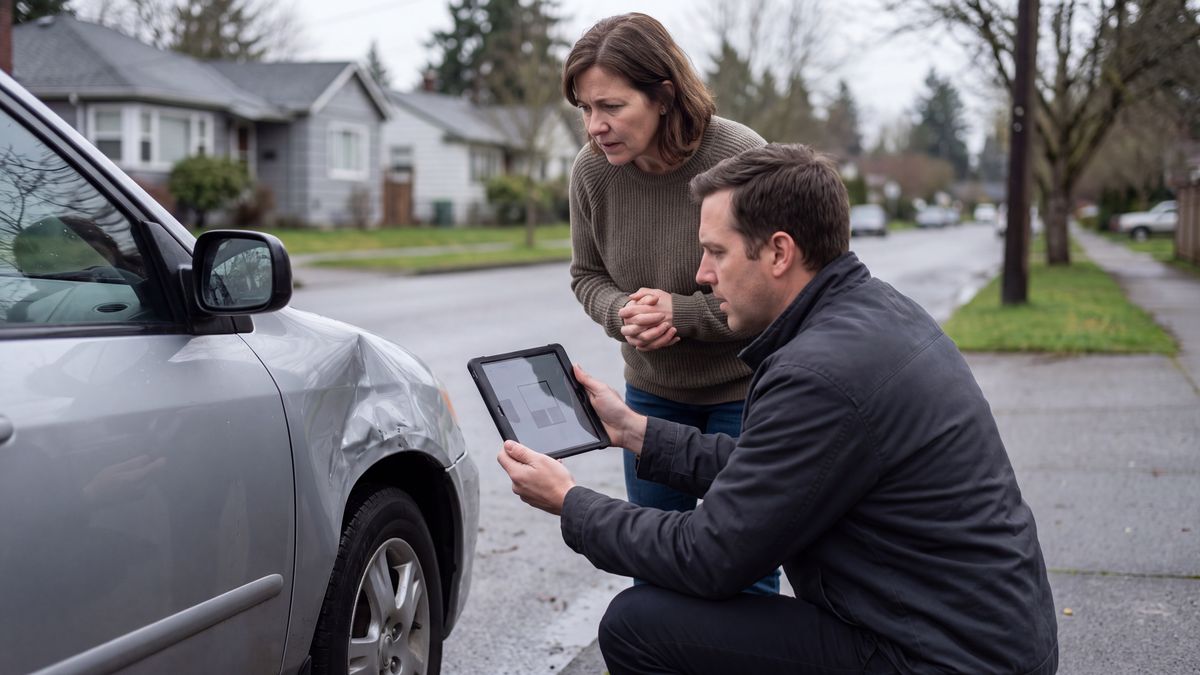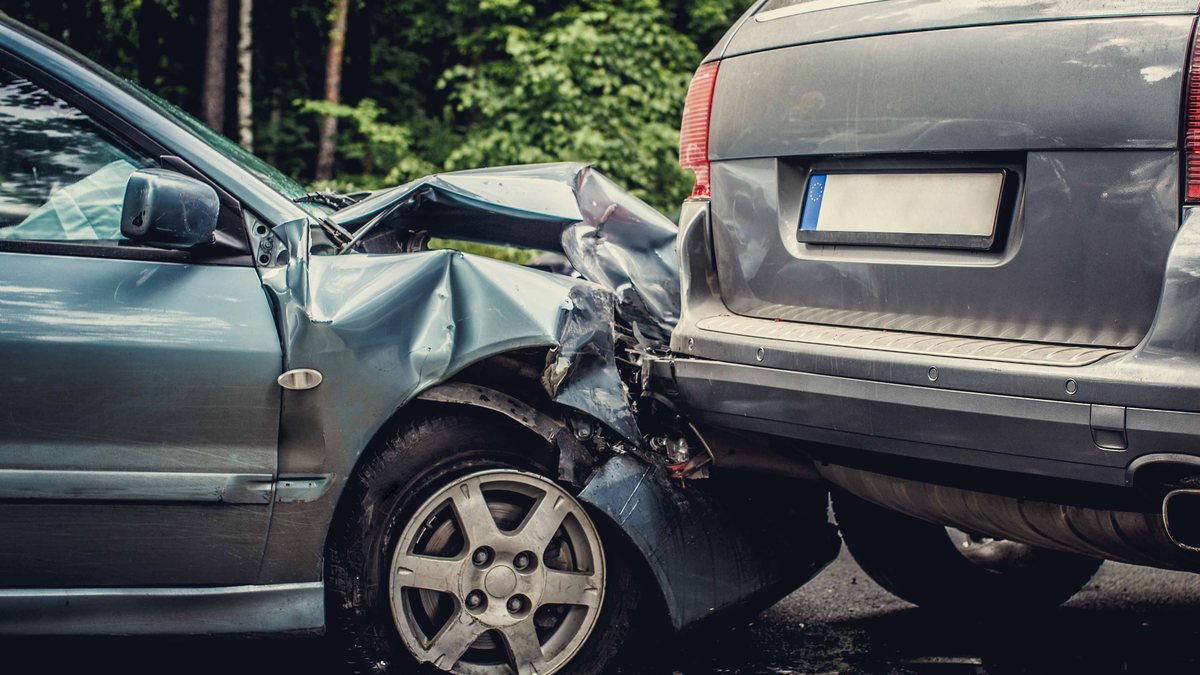
A chain collision (верижна катастрофа), a crash involving three or more vehicles, is one of the hardest cases in which to obtain compensation under motor third-party liability insurance (MTPL, „Гражданска отговорност“). The cars are hit from the front and from behind, there is often more than one driver at fault, and each insurer tries to shift the liability onto another. The injured person is left asking whom to turn to: for the car repair, for the medical treatment and for the pain.
Here you will learn what to do at the scene, how fault is established in a chain collision, which insurer pays and within what deadlines, when your own casco (comprehensive) insurance is the faster route, and what rights injured drivers and passengers have. At the end you will find a short example with three cars.
What to do immediately after a chain collision
When the police must be called
The Bulgarian Road Traffic Act (ЗДвП) requires every driver involved to stop and establish the consequences (Art. 123(1)(1) of the Road Traffic Act). From then on, everything depends on whether anyone is hurt:
- Someone is injured: the drivers must notify the Ministry of the Interior (police, dial 112), stay at the scene and not move the cars if they do not obstruct traffic (Art. 123(1)(2) of the Road Traffic Act). The police must attend the scene (Art. 125, item 1 of the Road Traffic Act) and draw up an accident report.
- Damage to property only, and full agreement between the participants: they may move the cars and fill in a joint accident report (двустранен констативен протокол) (Art. 123(1)(3)(b) of the Road Traffic Act).
- No agreement on the circumstances: the drivers do not leave the scene and notify the police (Art. 123(1)(3)(c) of the Road Traffic Act). The police must then attend (Art. 125, item 7 of the Road Traffic Act). The same applies if the accident has blocked the carriageway (Art. 125, item 2 of the Road Traffic Act).
Can a joint accident report be used with three cars?
Ordinance No. Із-41 of 2009, which governs the documents drawn up after road accidents, sets two conditions for the joint report: damage to property only, and agreement between the participants. It does not expressly limit the number of vehicles. The form, however, is designed for two vehicles („A“ and „B“), and in a chain collision there is almost always a dispute about who hit whom first. Our advice is therefore: with three or more cars, call the police, unless all the drivers are in complete agreement. A police report is much harder to challenge than several forms filled in hastily at the roadside.
Evidence to collect
- Photograph the position of the cars before they are moved: from a distance, so that their order is visible, and close up for each damaged part, front and rear separately. Photograph the marks on the road as well.
- Take down the witnesses' details. Often only an outside witness can say whether the middle car stopped in time or was pushed.
- Take down each driver's details and their MTPL insurance; every participant must provide them on request (Art. 123(2) of the Road Traffic Act).
- Secure video footage from dashcams and nearby cameras: it is deleted quickly.
- See a doctor even for mild neck pain. A medical document from the first few hours proves the link between the injury and the collision.
Who is at fault in a chain collision?
The most common cause: not keeping a safe distance
A driver must keep such a distance from the car in front that they can stop behind it if it slows down or stops suddenly (Art. 23(1) of the Road Traffic Act). That is why, in a rear-end collision, the driver behind is usually at fault. In a chain collision, however, the question is how many impacts there were and in what order:
- If the middle car stopped in time and was pushed into the front car by the impact of the last one, the last driver is usually the only one at fault. That driver is liable for the damage to both the middle and the front car.
- If the middle car first hit the front car on its own and was then hit from behind, two drivers may be at fault, each for their own impact.
- Sometimes the front driver is also at fault, if they braked sharply without need (Art. 24(1) of the Road Traffic Act) or suddenly cut in front of another car.
The role of the police report and of the expert
The police report is important evidence, but officers usually arrive after the collision, so the courts do not treat it as the final word on how the accident happened and who is at fault. In almost every chain-collision case the court appoints a court-appointed vehicle expert (автотехническа експертиза): the expert analyses the damage, the marks and the position of the cars and establishes how many impacts there were, in what order and at what speed. Without photographs of the cars' original positions, this becomes much harder.
From our practice: In a chain collision each insurer usually claims that the impact was caused by „the other“ car. Do not accept a refusal just because the report names one person at fault. The expert report, the photographs and the witnesses are decisive, so prepare them from day one.
Joint and several liability of several drivers at fault
When damage is caused by several persons, they are jointly and severally liable (Art. 53 of the Obligations and Contracts Act, ЗЗД): the injured person can claim the full compensation from any of them (Art. 122 of the Obligations and Contracts Act), and the one who pays recovers the others' shares from them (Art. 127 of the Obligations and Contracts Act). When each participant's contribution cannot be established, the Insurance Code (КЗ) divides the liability equally (Art. 499(7) of the Insurance Code).
Joint and several liability concerns one and the same damage. If your car received two separate impacts from two drivers, the court may find that each is liable only for the damage from their own impact; this depends on the facts and on the expert report.
Which insurer pays?
The compulsory motor third-party liability insurer of the driver at fault pays. This insurance covers damage caused to third parties, including pedestrians and other road users (Art. 493(1) of the Insurance Code): bodily injury, damage to other people's property, lost profits and the reasonable costs of the claim.
Where several drivers are at fault, each insurer is liable to the injured person in the same way as its insured driver. When the drivers at fault are jointly and severally liable, their insurers are jointly and severally liable as well (Art. 499(8) of the Insurance Code). In practice, you can file a claim for the full amount with one of them.
Two important limitations:
- The driver at fault gets nothing from their own MTPL insurance, neither for their injuries nor for their car (Art. 494, items 1 and 3 of the Insurance Code). For their own car they can rely only on casco.
- Loss of the car's value is not covered (Art. 494, item 11 of the Insurance Code), and damage to vehicles is assessed by the insurer under a methodology of the Guarantee Fund (Art. 499(3) of the Insurance Code).
The minimum cover limits are €6,450,000 for bodily injury and death and €1,300,000 for damage to property per accident, regardless of the number of injured persons (Art. 492 of the Insurance Code).
The claim and the court case against the insurer: step by step
- Written claim. You cannot go straight to court. You first file a written claim with the insurer of the driver at fault (Art. 380(1) and Art. 498(1) of the Insurance Code), with full and accurate details of the bank account for payment. Without them, you are treated as being in delay yourself, and the insurer owes no interest (Art. 380(3) of the Insurance Code).
- Documents and inspection. You provide the report, the photographs, the medical documents and the invoices, and you cooperate in the inspection (Art. 498(2) of the Insurance Code). If you have submitted a police report or a joint accident report, the insurer cannot refuse to decide on the claim (Art. 496(3) of the Insurance Code).
- Deadline of up to three months. The insurer must give its final decision within three months of the claim being filed: either pay or give a reasoned answer (Art. 496(1) and (2) of the Insurance Code).
- Court claim directly against the insurer. If the insurer does not pay in time, refuses, or you do not agree with the amount, you can sue it directly (Art. 432(1) and Art. 498(3) of the Insurance Code). The claim is filed at your current or permanent address or at the place of the accident (Art. 115(2) of the Civil Procedure Code, ГПК). For claims above €12,782.30 (25,000 лв.) the case starts before the regional court (окръжен съд) (Art. 104, item 4 of the Civil Procedure Code).
Interest and limitation
The insurer pays the default interest owed by the driver at fault, counted from the earliest of the dates of notification of the accident or of filing the claim (Art. 429(3) of the Insurance Code). If it does not pay within the statutory deadline, it also owes statutory interest of its own (Art. 497(1) of the Insurance Code). You can work out the amount with our statutory interest calculator.
| Deadline | Length | Legal basis |
|---|---|---|
| Insurer's decision on the claim | up to 3 months from filing | Art. 496(1) Insurance Code |
| Limitation for a direct claim against the insurer | 5 years from the accident | Art. 378(2) Insurance Code |
| Suspension of limitation | from the claim until the decision (at the latest until the statutory deadline expires) | Art. 378(9) Insurance Code |
| Limitation for a casco claim | 3 years from the event | Art. 378(1) Insurance Code |
| Claim against the driver at fault personally | 5 years | Art. 110 and Art. 114(3) Obligations and Contracts Act |
Casco: the faster route for the car
If you have casco, it is often faster to claim from your own insurer, without waiting for the dispute between the insurers of the drivers at fault. Once it has paid, the casco insurer steps into your rights and recovers the amount directly from the MTPL insurer of the driver at fault (Art. 411 of the Insurance Code), known as subrogation. Casco is also the way out for a driver who is at fault themselves.
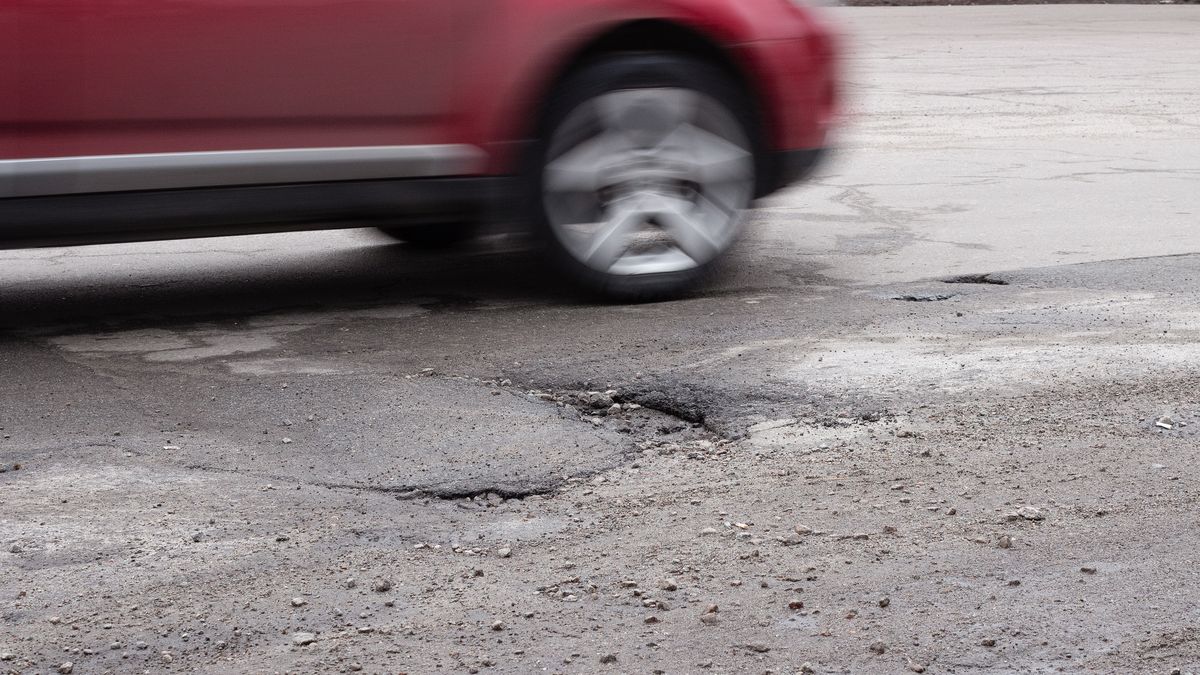
If the casco insurer refuses or undervalues the damage, see what to do if a casco claim is refused or undervalued. The part that is not covered, for example the deductible, you can claim from the insurer of the driver at fault. The same logic applies when the damage was caused by a poorly maintained road; see compensation for car damage from a pothole.
Bodily injuries: drivers and passengers
The at-fault driver's insurance covers the pecuniary damage (treatment, medicines, rehabilitation, lost income) and the non-pecuniary damage (pain and suffering) resulting from the bodily injury (Art. 493(1)(1) of the Insurance Code). Since 1 August 2025 the insurer has assessed the compensation under a methodology of the Guarantee Fund (Art. 499(1) of the Insurance Code), which must guarantee full and fair compensation (Art. 535a(1) of the Insurance Code). In court, non-pecuniary damage is as a rule assessed on the basis of fairness (Art. 52 of the Obligations and Contracts Act); what weight the methodology will carry in court disputes remains to be seen in practice.
Passengers are in the strongest position, because they bear no fault. When both the driver of their car and another driver are at fault, they can claim compensation from the insurer of the car they were travelling in and from the insurer of the other driver at fault, jointly and severally. The exclusion in Art. 494, item 1 of the Insurance Code concerns only the driver at fault, not their passengers. The compensation may be reduced if the injured person was not wearing a seatbelt and this made the injuries worse (Art. 51(2) of the Obligations and Contracts Act; Art. 137a(1) of the Road Traffic Act).
How injuries are proven and what amounts the courts award is covered in our articles on the civil claim for bodily injury, on compensation amounts for a broken leg or arm and on injuries in an accident caused by a bad road.
Special cases
- Uninsured car. If the car at fault is normally based in Bulgaria and has no MTPL insurance, compensation for injuries and for property is paid by the Guarantee Fund (Гаранционен фонд) (Art. 557(1)(2)(a) of the Insurance Code). The claim can also be filed with any insurer that offers MTPL insurance; it is obliged to accept it (Art. 558(3) of the Insurance Code).
- Unidentified car that fled the scene. The Guarantee Fund pays for the injuries (Art. 557(1)(1) of the Insurance Code). It pays for property only if there were significant bodily injuries requiring a hospital stay, or a death, and then only for damage above €250 (Art. 557(2) of the Insurance Code).
- Car at fault with foreign registration (for example, German, Romanian or Greek plates). The claim is handled by the foreign insurer's correspondent in Bulgaria or by the National Bureau of Bulgarian Motor Insurers (Национално бюро на българските автомобилни застрахователи) (Art. 511(1) of the Insurance Code), with the same three-month deadline (Art. 512(1) of the Insurance Code). Before a Bulgarian court, the Bureau is the defendant, unless you bring the claim directly against the foreign insurer (Art. 513(1) of the Insurance Code).
- Accident abroad. The procedure is different: the claim is filed in Bulgaria with the foreign insurer's representative. We explain it in detail in the article on car accidents abroad and the Green Card.
Example: a chain collision with three cars
Imagine a traffic jam on a boulevard. Car 1 stops. Car 2 stops in time behind it. The driver of car 3 is looking at their phone, hits car 2 from behind and pushes it into car 1. The driver of car 1 suffers a neck injury, and a passenger in car 2 a broken arm.
| Injured person | Damage | Claims from |
|---|---|---|
| Driver of car 1 | Repair of the rear, injury | The insurer of car 3 |
| Owner of car 2 | Repair of the front and rear | The insurer of car 3 (or their own casco) |
| Passenger in car 2 | Broken arm | The insurer of car 3 |
| Driver of car 3 | Their own car and injuries | Only their own casco and personal insurance |
Now change one fact: the expert finds that car 2 hit car 1 on its own before being hit from behind. Then the drivers of car 2 and car 3 are both at fault. If the injury of the passenger in car 2 results from both impacts, the passenger can claim the full compensation from the insurer of car 2 or from that of car 3 (Art. 499(8) of the Insurance Code), and the insurers settle between themselves who bears which share. The driver of car 1 claims from the insurer of car 2 and, if the impact from behind pushed car 2 into car 1 a second time, also from the insurer of car 3.
Frequently Asked Questions (FAQ)
Who is at fault in a chain collision?
Usually the driver who did not keep a safe distance (Art. 23(1) of the Road Traffic Act). If the middle car stopped in time and was pushed, only the last driver is at fault; if it hit the front car on its own, two drivers may be at fault. The answer comes from the vehicle expert's report.
Can I claim the full compensation from just one insurer?
Yes, when the drivers at fault are jointly and severally liable. Their insurers are then jointly and severally liable too (Art. 499(8) of the Insurance Code), and you can claim the full amount from any of them (Art. 122 of the Obligations and Contracts Act). If the damage results from separate impacts, each may be liable only for their own.
Do I have to call the police if nobody is hurt?
It is not mandatory if all the drivers agree on the circumstances and fill in a joint accident report. With three or more cars, however, there is almost always a dispute, and then the police must be notified (Art. 123(1)(3)(c) of the Road Traffic Act).
How long does the insurer have to pay me?
Up to three months from the written claim (Art. 496(1) of the Insurance Code), either to pay or to give a reasoned answer. You can only go to court after that: if it does not pay in time, refuses, or you do not agree with the amount (Art. 498(3) of the Insurance Code).
Is it better to use my casco?
For the car, often yes, because it is faster and does not depend on the dispute over who is at fault. The casco insurer then recovers the amount from the insurer of the driver at fault (Art. 411 of the Insurance Code). If you are refused, see the article on casco claim refusals and low valuations.
I am partly at fault. Do I get anything?
From your own MTPL insurance, no (Art. 494, items 1 and 3 of the Insurance Code). From the insurer of the other driver at fault you can receive compensation reduced by your own contribution (Art. 51(2) of the Obligations and Contracts Act). If the contributions cannot be established, the liability is divided equally (Art. 499(7) of the Insurance Code).
I was a passenger. Whom do I claim from?
From the insurer of the car you were travelling in, if its driver is at fault, and from the insurer of the other driver at fault, jointly and severally. The compensation may be reduced only if not wearing a seatbelt made your injuries worse. How injuries are proven is explained in the article on the civil claim for bodily injury.
What happens if the car at fault is uninsured?
The Guarantee Fund pays the compensation (Art. 557(1) of the Insurance Code). You can file the claim with the Fund or with any insurer that offers MTPL insurance (Art. 558(3) of the Insurance Code). Similar rules for injured persons are covered in the article on injuries in an accident caused by a bad road.
The driver at fault has a foreign-registered car. Where do I file the claim?
With the foreign insurer's correspondent in Bulgaria or with the National Bureau of Bulgarian Motor Insurers (Art. 511(1) of the Insurance Code). The deadline for a decision is also three months. If the accident happened in another country, see the article on car accidents abroad and the Green Card.
What is the limitation period for compensation from the insurer?
Five years from the date of the accident for a direct claim against the insurer (Art. 378(2) of the Insurance Code). The limitation period is suspended while the insurer is considering the claim (Art. 378(9) of the Insurance Code). Evidence disappears much faster, however, so do not delay.
How can we help you?
A chain collision is rarely a „clean“ claim. There are usually several insurers, a dispute about the order of the impacts and objections of contributory fault. A well-prepared claim, addressed to the right insurer and backed by evidence of how the accident happened, often settles the matter without a court case or shortens it considerably.
Our insurance lawyer in Sofia will assess who is at fault and where to direct your claim, prepare it and represent you against the insurer or the Guarantee Fund in court. The information in this article is general and does not guarantee a specific result. Contact us for a review of your case while the evidence is still available.