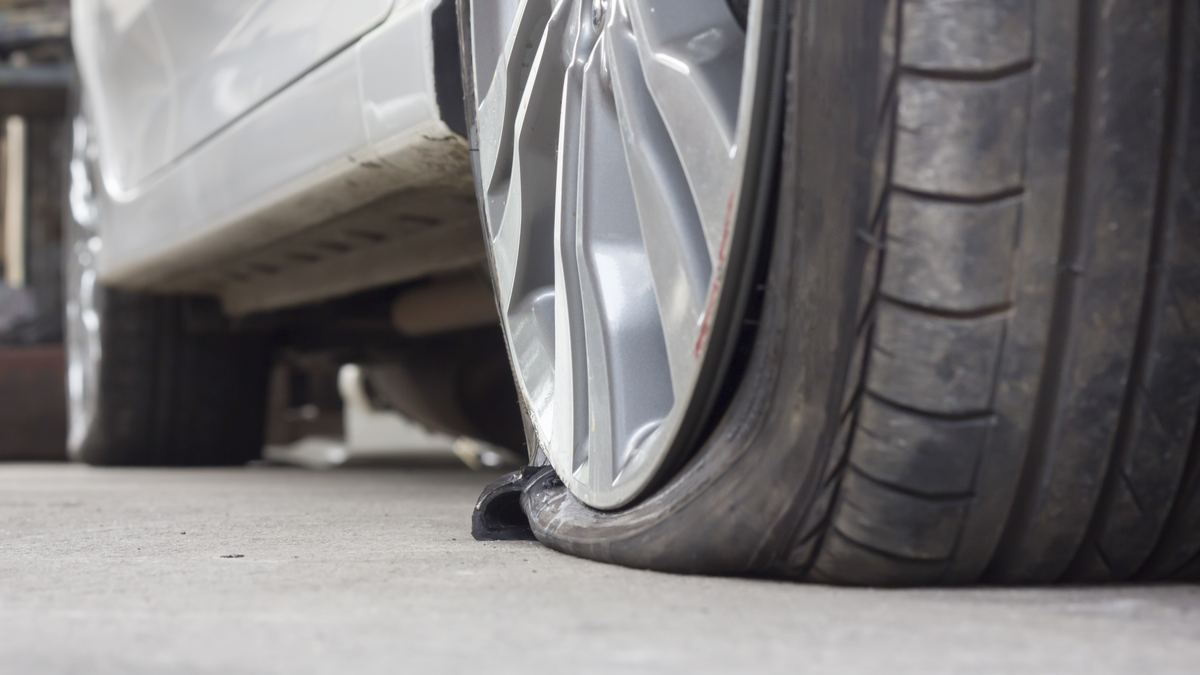
A pothole accident (a burst tyre, a bent wheel rim, a broken suspension arm) can entitle you to compensation for your car from whoever manages the road. In towns and cities this is usually the municipality, and on national roads the Road Infrastructure Agency (Агенция „Пътна инфраструктура“, АПИ). The law requires the road manager to keep the road in good condition, to mark obstacles immediately and to remove them as quickly as possible (Art. 167(1) of the Road Traffic Act). Where this has not been done, the courts award compensation in hundreds of cases every year.
In this article you will learn how to establish who is responsible for the road, what to do at the scene, what evidence decides the case, the role of comprehensive (Casco) motor insurance and how the municipality or the Road Infrastructure Agency try to shift the blame onto the driver. Here we discuss only damage to the vehicle. If people were injured in the incident, personal injury claims have their own specific features, and we will devote a separate article to them.
Who is responsible for the pothole: the municipality or the Road Infrastructure Agency?
The Roads Act (Закон за пътищата, ЗП) divides roads into national and local, and local roads into municipal and private roads open to public use (Art. 3 of the Roads Act). National roads are exclusive state property, and municipal roads are public municipal property (Art. 8). This determines against whom you bring your claim:
- National roads are managed by the Road Infrastructure Agency (Art. 19(1)(1) of the Roads Act), which also repairs and maintains them (Art. 30(1)).
- Municipal roads are managed by the mayor of the relevant municipality (Art. 19(1)(2)), and their repair and maintenance are carried out by the municipality (Art. 31).
- Streets in towns and villages are, as a rule, maintained by the municipality. A special case is sections of national roads within towns: there the Road Infrastructure Agency and the municipalities act jointly by mutual agreement (Art. 30(3)), while the municipality is responsible for pavements, cycle lanes and street lighting (Art. 30(4)).
How to find out what kind of road it is
- Look at the road number. National roads are numbered (for example I-1, II-81, III-822), and the number appears on road signs and kilometre markers. If you are outside a town or village and see such a number, the road almost certainly belongs to the Road Infrastructure Agency.
- Note the kilometre or the exact address. In court, a description such as "at km 82+500" or "in front of No. 15 on … Street" is much stronger than "somewhere on the road to …".
- Ask in writing. If in doubt, send an enquiry to the municipality or to the Road Infrastructure Agency asking who manages the particular section. The reply is also useful as evidence.
- On an urban section of a national road (a boulevard that forms part of a main road), responsibility is sometimes disputed between the Road Infrastructure Agency and the municipality. In such a case, whom to sue is a question worth discussing with a lawyer before you file the claim.
You will find an overall map of municipal responsibility for roads, pavements, manholes and trees in our guide how to sue the municipality for damage caused by poor infrastructure.
On what legal basis is compensation claimed?
The courts treat a poorly maintained road as inaction on the part of the employees of the municipality or the Road Infrastructure Agency who are tasked with marking and removing obstacles. The claim is therefore a civil one under Art. 49 in conjunction with Art. 45 of the Obligations and Contracts Act (ЗЗД), i.e. the liability of a principal for damage caused by the persons to whom it has assigned work. You do not need to identify which specific employee failed to act.
In judgments in such cases the courts stress something else as well: the cause of the deterioration of the road surface (weather conditions, heavy lorries, old repairs) is irrelevant to liability. Nor does it matter whether maintenance has been contracted out to a private company; the road manager is liable to the injured party and can then recover the amount from its contractor.
From our practice: What is decisive is that the pothole was unmarked and unsecured. If there was a warning sign or a barrier at the spot, the municipality's defence becomes much stronger. That is why you should also photograph the surroundings, including the absence of signs.
What to do immediately after hitting the pothole
- Stop in a safe place and switch on your hazard lights. Do not stay in the carriageway if it is dangerous.
- Photograph the pothole with a landmark. Take close-up shots (with an object for scale: a key, a bottle, a tape measure), wide shots (with a sign, a building number, a junction or a kilometre marker) and shots from the driver's position, to show whether the pothole was visible. If it was full of water, this should also be visible.
- Photograph the absence of warnings: the road in both directions, without signs or barriers.
- Photograph the damage to the car: the tyres, wheel rims, suspension and underside, if it is safe to do so.
- Note down the witnesses: names and phone numbers of passengers, other drivers, people living nearby. In many cases their testimony settles the question of how the incident happened.
- Call 112 and note the time of the call. See below for when the police are required to attend.
- Notify your insurer if you have Casco, within the deadline in the policy.
- Keep all documents: invoices for repairs, roadside assistance, inspection, a hire car, as well as the damaged parts themselves until they have been inspected.
Police accident report: when is one drawn up for a single-vehicle accident?
The Road Traffic Act (ЗДвП) lists the cases in which the Ministry of the Interior's services must attend the scene. One of them is particularly important for potholes: where the accident involves a single vehicle and the car cannot move under its own power because of the damage (Art. 125(8) of the Road Traffic Act). Attendance is also mandatory where people are injured, where the accident has blocked the carriageway, and in the other cases listed in Art. 125. A report (протокол за ПТП) is drawn up for the attendance (Art. 125a(1)).
If the car can continue, the police are not required to come and often do not. That does not mean you lose the case. The courts also accept the mechanism of the accident on the basis of other evidence: photographs, witnesses, the notification to the insurer and an automotive engineering expert report. So even without a police report:
- call 112 and ask for the incident to be logged;
- document everything as described above;
- if necessary, submit a written report to the municipality or the Road Infrastructure Agency the same day or the next day.
Beware of the opposite extreme too: municipalities often dispute that a police accident report proves the mechanism of the impact, because police officers usually arrive after the incident. The report is important evidence, but not the only evidence.
A written claim to the municipality or the Road Infrastructure Agency: the first step
Before going to court, send a written claim to the road manager. In it, describe:
- the date, time and exact place;
- how the incident happened and why the pothole was not visible or marked;
- the damage and its amount, with invoices and photographs attached;
- a bank account for payment and a deadline for a reply.
You need to be realistic: large municipalities rarely pay voluntarily. Sofia Municipality, for example, states that it pays only where there is an undisputed legal basis, which in practice means after a final court judgment. The claim still makes sense: it shows good faith, sometimes leads to an out-of-court settlement and reveals what defence the defendant will choose. If you are still looking for a litigation lawyer, see what to ask a lawyer before instructing them.
If you have Casco: the insurer pays and recovers its money
The easiest route for the owner is comprehensive (Casco) motor insurance, if it covers this type of damage. The insurer assesses and pays the compensation, and then is subrogated to your rights against the person who caused the damage, up to the amount paid and the usual costs of determining it (Art. 410(1) of the Insurance Code). In practice, the insurer brings a recourse claim against the municipality or the Road Infrastructure Agency. That is why a large share of the pothole cases in the court registers have been brought by insurers, and hundreds of them have been won.
What this means for you:
- You do not pay legal costs for the dispute with the municipality; it is between the insurer and the road manager.
- You still need to document the incident, because the insurer will ask for photographs, a damage declaration and any police report.
- If the insurer does not cover everything (for example because of an excess or a policy exclusion), you can bring your own claim against the municipality or the Road Infrastructure Agency for the uncovered part.
We also explain how the "insurer pays and then recovers from the party at fault" logic works in property insurance, and when insurers refuse compensation, in our article on home insurance and refused claims.
The car's own compulsory third-party liability insurance does not cover damage to your car; it covers the damage you cause to others.
Without Casco: a claim directly against the municipality or the Road Infrastructure Agency
If you do not have Casco, you bring the claim yourself. This is how the case proceeds:
- Gathering evidence: photographs, witnesses, the police report (if any), invoices, documents proving ownership of the car.
- A written claim to the municipality or the Road Infrastructure Agency (described above).
- A statement of claim to the competent court, with the court fee paid. State the amount for the repair and, separately, the other losses: roadside assistance, inspection, hire of a replacement car, if proved.
- The defendant's response: the municipality usually disputes everything: that the pothole exists, that it caused the damage, that the repair was necessary and that the driver was not at fault.
- Expert report and witnesses: examination of the witnesses and a court-appointed automotive engineering expert report.
- Judgment: if the claim is upheld, the municipality or the Road Infrastructure Agency is ordered to pay the compensation, interest and your costs.
The automotive engineering expert report: the key evidence
The court-appointed automotive engineering expert report answers the questions that decide the case:
- is the damage consistent with hitting a pothole of that size;
- what was the mechanism of the accident;
- was the pothole visible and could the driver have avoided it;
- what is the market value of the necessary repair at the date of the incident.
The court awards the actual value of the damage as determined by the expert, not necessarily the amount on the invoice. That is why it is important to keep the damaged parts and photographs of them: the expert report is often prepared months or years later, and the expert works from the documents.
Contributory fault: speed, visibility, warning signs
The municipality or the Road Infrastructure Agency almost always raise an objection of contributory fault (Art. 51(2) of the Obligations and Contracts Act): that the driver was going too fast for the conditions, was not watching the road or could have driven around the pothole. They rely on Art. 20 of the Road Traffic Act, under which the driver must choose a speed that allows them to stop before any foreseeable obstacle.
In many judgments the courts reject this argument on the ground that an unmarked and unsignposted pothole is not a foreseeable obstacle. The driver's duty of care does not include knowing where the bumps in the road are. The burden of proving a specific breach by the driver lies with the defendant. But it should not be underestimated: if there is evidence of speeding, of poor visibility that you did not adapt to, or of an "Uneven road" sign and a speed limit, the compensation may be reduced. The assessment turns on the specific facts and depends on the court.
| Circumstance | Usual effect on the claim |
|---|---|
| Pothole with no sign or barrier | Strong position for the injured party |
| Water-filled, invisible pothole | Argument that the obstacle was not foreseeable |
| Speeding proved | Risk of a reduction under Art. 51(2) of the Obligations and Contracts Act |
| "Uneven road" sign and speed limit in place | The defendant's defence is stronger |
| No photographs or witnesses | Mechanism difficult to prove |
Real cases against municipalities and the Road Infrastructure Agency
The following cases have been reported in the media. Amounts from before 2026 are given in leva as reported, with their approximate equivalent in euro.
- Sofia City Court, 2025: a Lamborghini Urus drives into an unmarked, water-filled pothole on Akad. Rostislav Kaishev Street and damages its rear left wheel rim. The Casco insurer pays BGN 6,557.01 (≈ EUR 3,353) and recovers it from Sofia Municipality. The municipality disputes the causal link, but the expert report confirms it. With costs, the amount exceeds BGN 7,700 (≈ EUR 3,939) plus interest. The judgment of 17.04.2025 is not subject to appeal.
- Sofia, Ivan Hadzhienev Street, 2025: an evening impact with an unmarked pothole in dry weather; the wheel rim, parts of the front axle and the steering system are damaged. The repair cost of BGN 3,897.88 (≈ EUR 1,993) grows with interest and costs to BGN 6,046 (≈ EUR 3,091). The court rejects the municipality's objection of contributory fault. The judgment of 06.11.2025 is final.
- Montana District Court, 2022: a car hits an unsecured and unmarked pothole on the Montana–Belogradchik national road; the police draw up a report at the scene. The court orders the Road Infrastructure Agency to reimburse the Casco insurer BGN 361.98 (≈ EUR 185), plus interest and BGN 545 in costs, finding that there was no evidence that the driver had been speeding.
- Blagoevgrad District Court: a Ferrari drives into an unmarked, unfenced pothole on Aleksandar Stamboliyski Street (the incident dates from 2008). The municipality is ordered to pay the insurers BGN 3,737.73 (≈ EUR 1,911) in compensation, plus interest and costs, BGN 5,532.99 in total. The judgment was reported as subject to appeal.
- The scale in Sofia: from 1.01.2021 to 21.08.2026, Sofia Municipality paid around EUR 1.77 million for damage to cars caused by road defects, including interest and costs. There were 952 court judgments against it, and at the time of the report 267 cases were pending.
Practice shows that the individual amounts are often modest, but interest and costs double the bill for the municipality when it refuses to pay voluntarily.
Deadlines, fees and which court
| Question | Answer | Legal basis |
|---|---|---|
| Limitation period | 5 years | Art. 110 of the Obligations and Contracts Act |
| Runs from | Identification of the person responsible (usually the day of the incident) | Art. 114(3) of the Obligations and Contracts Act |
| Interest | Statutory interest from the date of the damage | Art. 84(3) of the Obligations and Contracts Act |
| Statutory interest rate from 1.1.2026 | ECB main refinancing rate + 8 points | Council of Ministers Decree No. 347/2025 |
| Court fee | 4% of the amount claimed, minimum EUR 25.56 | Tariff of State Fees under the Civil Procedure Code |
| First instance | District Court (районен съд); Regional Court (окръжен съд) for claims over BGN 25,000 (≈ EUR 12,782) | Art. 104(4) of the Civil Procedure Code |
Most claims for damage to cars fall below the Regional Court threshold and are heard by the District Court. When the insurer brings the recourse claim, the courts usually calculate default interest on its claim from the date of the demand to the defendant, not from the day of the incident. You will find more on tort claims on the page of our compensation lawyers.
Other damage from poorly maintained infrastructure
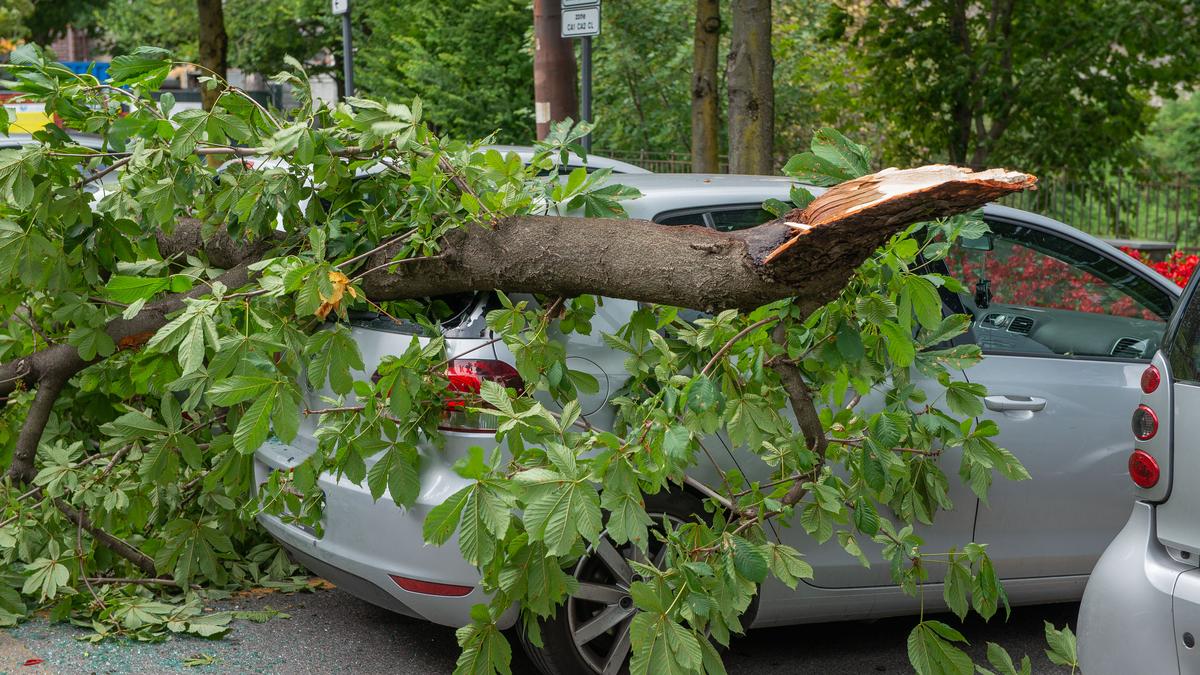
Potholes are not the only risk to your car. Branches and trees that fall in storms, and unsecured manholes and excavations, also lead to claims against the municipality or the owner of the facility. See who pays when a tree or branch falls on your car and who is liable for a fall into a manhole or trench.
Frequently Asked Questions (FAQ)
Can I get compensation for a tyre burst by a pothole?
Yes. The municipality or the Road Infrastructure Agency is liable for all property damage caused by an unmarked pothole: a burst tyre, a bent wheel rim, damaged suspension. You must prove the incident, the place, the damage and the link between them. For the general approach, see our guide how to sue the municipality for infrastructure damage.
Who is responsible for potholes: the municipality or the Road Infrastructure Agency?
The municipality is responsible for municipal roads and streets (Art. 31 of the Roads Act), and the Road Infrastructure Agency for national roads (Art. 30). On urban sections of national roads the two institutions act by mutual agreement, so the defendant must be chosen carefully.
Do I have to call the police if I hit a pothole?
The police are required to attend if the car cannot move under its own power, if anyone is injured, or in the other cases listed in Art. 125 of the Road Traffic Act. If the car can move, call 112 and ask for the report to be logged, and document the incident with photographs and witnesses.
I have Casco. Do I have to sue the municipality myself?
No. The insurer pays the compensation and is then subrogated to your rights against the municipality or the Road Infrastructure Agency (Art. 410(1) of the Insurance Code). A similar logic applies to property insurance; see our article on home insurance and refused claims.
What happens if the insurer paid less than the cost of the repair?
You can claim the uncovered part, such as the excess, directly from the municipality or the Road Infrastructure Agency. You must prove the full amount of the damage, usually by means of an automotive engineering expert report.
Will the municipality pay voluntarily?
Rarely. Large municipalities usually pay only after a final court judgment. A written claim is still useful, because it shows good faith and sometimes leads to a settlement without a court case.
Can the municipality claim that I am to blame?
Yes, it almost always raises an objection of contributory fault: excessive speed, lack of attention. The burden of proving a specific breach lies with the municipality, and many courts hold that an unmarked pothole is not a foreseeable obstacle. We explain how to choose a lawyer for a dispute like this in our article how to choose a good lawyer.
How long do I have to bring a case?
The limitation period is 5 years (Art. 110 of the Obligations and Contracts Act) and runs from the identification of the person responsible (Art. 114(3)), usually from the day of the incident. The evidence, however, disappears quickly: the pothole is repaired, witnesses forget.
How much does a case for damage to my car cost?
The court fee is 4% of the amount claimed, but not less than EUR 25.56, plus a deposit for the expert report and the lawyer's fee. If you win, the court orders the defendant to reimburse your costs in proportion to the part of the claim upheld.
Can I sue the municipality if a branch falls on my car?
Yes, if the fall is due to poorly maintained trees for which the municipality is responsible. In a storm, the question is more complicated; see our article on a fallen tree or branch on a car.
What is different if I drop into an open manhole rather than a pothole?
Manholes often belong to water, energy or telecoms companies rather than the municipality, so it matters who owns the facility. We explain this in detail in our article I fell into a manhole or trench: who pays?.
How can we help you?
Pothole damage cases look small, but they are won or lost on details: the right defendant, the quality of the photographs, the witnesses and the automotive engineering expert report. The municipality and the Road Infrastructure Agency defend themselves actively, and interest and costs make early, accurate preparation all the more important.
Mechkova & Dimitrova Law Firm will assess who is responsible for the road, prepare the claim and the statement of claim, and represent you in court. The information in this article is general and does not guarantee any particular outcome. Contact us to have your case assessed while the evidence is still available.