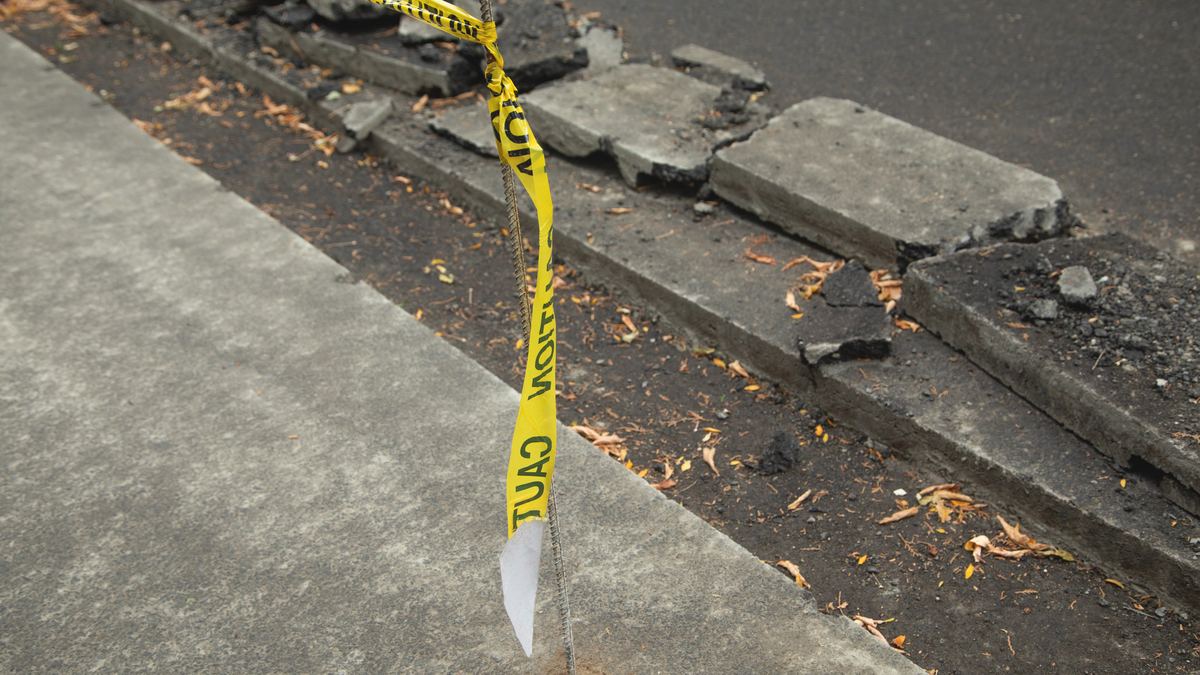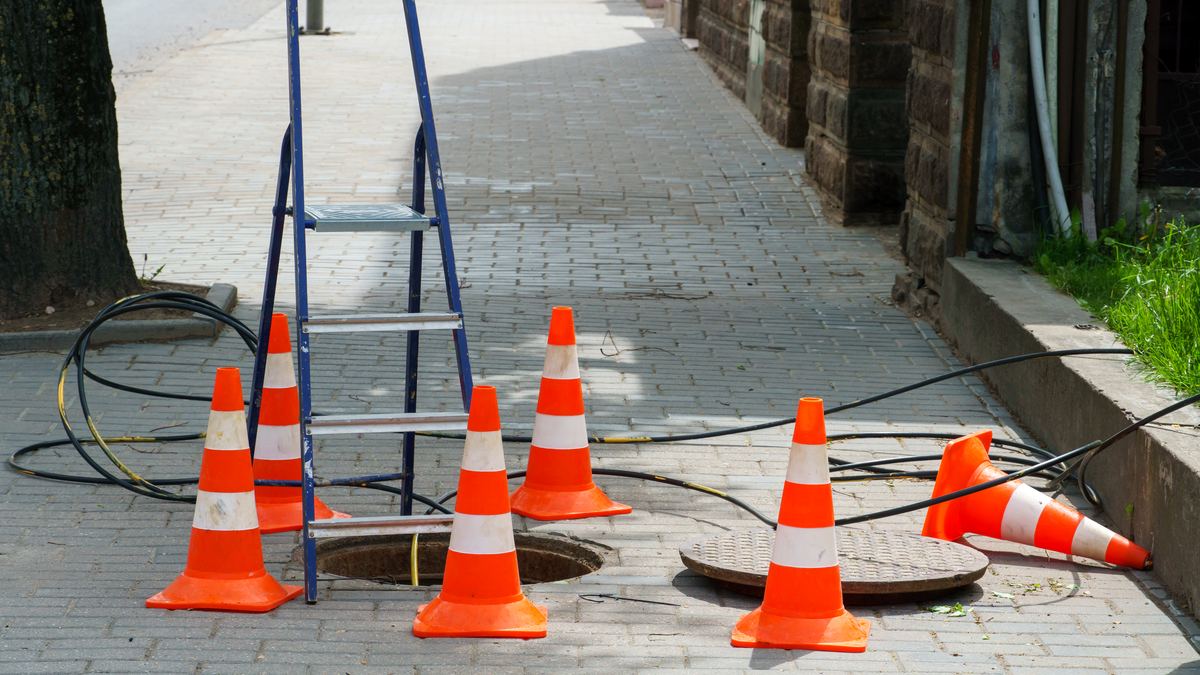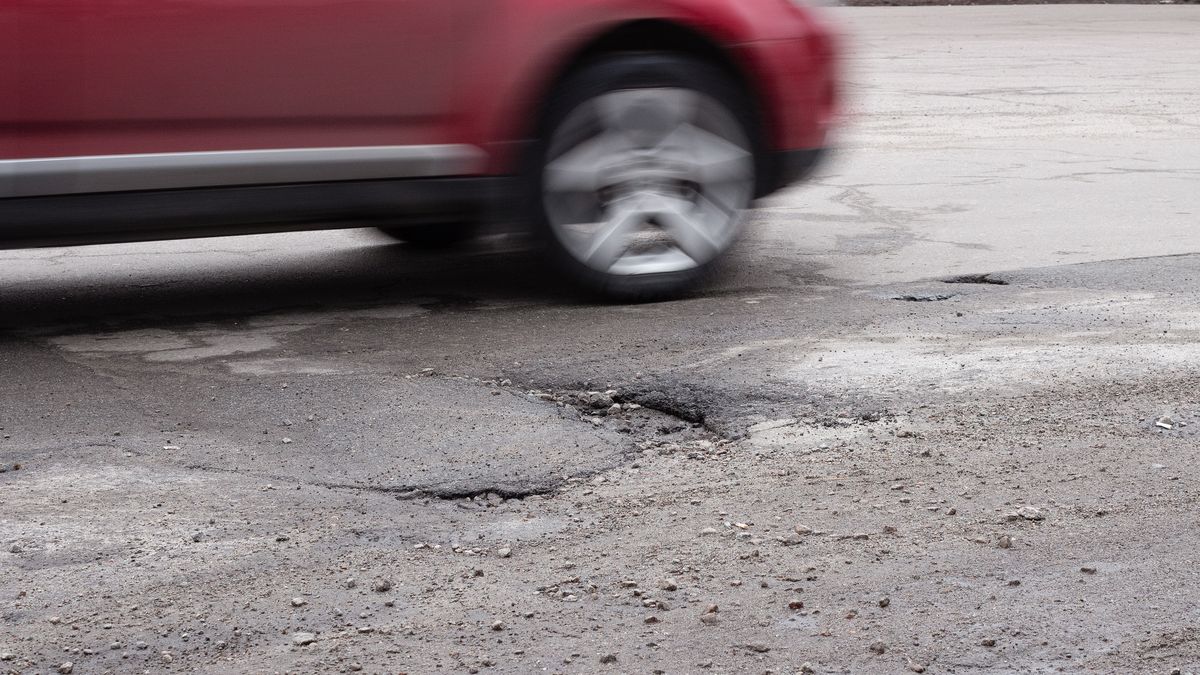
A road accident caused by a bad road, whether an unmarked pothole, asphalt cut out during roadworks, a sunken manhole or a rut, often ends not only with a damaged car but also with bodily injuries: fractures, head injuries, torn ligaments. In such a case the injured person is entitled to compensation for pain and suffering and for the cost of treatment. Whom to claim it from, however, is not always obvious: it may be the municipality, the Road Infrastructure Agency (Агенция „Пътна инфраструктура“, АПИ), the driver at fault and their insurer, or several of them at once.
This article is for people who were physically injured: drivers, passengers, motorcyclists, cyclists. For damage to the car alone, see our article on pothole damage to your car and compensation. Here you will find out who is liable, what to do in the first few days, when a claim must first be made to an insurer and how the court assesses seatbelts, helmets and speed.
Who is liable when an accident is caused by a bad road?
The road operator: the municipality or the Road Infrastructure Agency
The law requires those who manage a road to keep it in good condition, to mark obstacles immediately and to remove them as quickly as possible (Art. 167(1) of the Road Traffic Act, ЗДвП). Who the operator is depends on the type of road:
- National roads are managed by the Road Infrastructure Agency (Art. 19(1), item 1 of the Roads Act, ЗП), which also repairs and maintains them (Art. 30(1) of the Roads Act).
- Municipal roads and streets are repaired and maintained by the municipality (Art. 31(1) of the Roads Act).
- A national road passing through a town is a special case: the Road Infrastructure Agency and the municipality act there jointly by mutual agreement (Art. 30(3) of the Roads Act), while the municipality is responsible for pavements, cycle lanes, underpasses and lighting (Art. 30(4) of the Roads Act). In settlements with up to 100,000 inhabitants, routine repairs and winter maintenance of the national road are the responsibility of the Road Infrastructure Agency (Art. 30(5) of the Roads Act). On such sections the correct defendant must be checked carefully.
The courts treat a poorly maintained road as inaction by the employees to whom the municipality or the Road Infrastructure Agency has assigned its maintenance. This is why the claim is a civil one, under Art. 49 in conjunction with Art. 45 of the Obligations and Contracts Act (ЗЗД). You do not need to name the employee who failed to act. We write about this type of liability in detail in our guide how to sue the municipality for damage caused by poor infrastructure.
The driver at fault and their insurer
A bad road is rarely the only cause. A driver must choose their speed according to the condition of the road and the visibility (Art. 20(2) of the Road Traffic Act). If they drove too fast, were distracted or had been drinking, they are also liable to the injured persons: their own passengers, the other driver, a pedestrian or a cyclist.
The driver's liability is covered by compulsory motor third-party liability insurance („Гражданска отговорност“ на автомобилистите). It covers the non-pecuniary and pecuniary damage from bodily injury caused to third parties, "including pedestrians, cyclists and other road users" (Art. 493(1) of the Insurance Code, КЗ). The injured person can claim compensation directly from the insurer (Art. 432(1) of the Insurance Code), without suing the driver personally.
When several persons are liable
If the injury was caused by several persons, they are jointly and severally liable (Art. 53 of the Obligations and Contracts Act). In practice this means that the injured person can claim the full compensation from any one of them, for example from the driver's insurer or from the municipality, and they settle among themselves who bears which share. The Insurance Code confirms that where there are several persons who caused the harm, the insurers are liable in the same way as those persons themselves, including jointly and severally (Art. 499(8) of the Insurance Code). Whom to sue is a tactical decision that is best considered before the first claim is made.
Driver, passenger, motorcyclist, cyclist: who can claim what
| Injured person | From the road operator (municipality / Road Infrastructure Agency) | From a driver's motor third-party liability insurer |
|---|---|---|
| Driver in a single-vehicle accident | Yes | No: the policy does not cover the damage of the driver at fault (Art. 494, item 1 of the Insurance Code) |
| Passenger in the car | Yes | Yes, if their driver is at fault |
| Motorcyclist | Yes | Yes, if another driver at fault was involved in the accident |
| Cyclist or pedestrian | Yes | Yes, if hit by a car |
The driver in a single-vehicle accident
If you were driving alone and crashed because of an unmarked pothole, your own motor third-party liability insurance does not cover your injuries. Your claim is against the municipality or the Road Infrastructure Agency. The defendant will almost certainly argue that you were driving at an inappropriate speed, which is why photographs, the police report and witnesses are decisive.
The passenger
The passenger is in the strongest position: they were not driving the car and usually did not contribute to the accident. They can claim compensation from the road operator and, if the driver is also at fault, from the driver's insurer as well.
Note: if the passenger knew or should have known that the driver had been drinking or was under the influence of drugs, the insurer cannot refuse cover, but it may raise an objection of contributory fault (Art. 477(4) of the Insurance Code). The compensation may then be reduced.
Motorcyclists and e-scooter riders
For two-wheelers a pothole is far more dangerous: a single impact of the front wheel against its edge is enough to cause a fall. Riders and passengers on motorcycles must wear a helmet (Art. 137f of the Road Traffic Act), as must riders of electric scooters (Art. 80a(1), item 3 of the Road Traffic Act). Not wearing a helmet does not release the road operator from liability, but it may reduce the compensation if the head injury is more serious because of it.
Cyclists and pedestrians
A cyclist who falls into a pothole on the carriageway or on a cycle lane claims compensation from the operator; for cycle lanes in towns and villages this is the municipality. If they were hit by a car whose driver lost control because of the pothole, they can also claim from that driver's insurer.
What to do immediately after the accident
- Call 112. In an accident with an injured person, the police must attend the scene (Art. 125, item 1 of the Road Traffic Act). The police report is key evidence both before the insurer and in court.
- Seek medical help on the same day, even if the injury seems minor. Tell the doctor that you were injured in a road accident and ask for this to be recorded in the outpatient record.
- Photograph the road with a reference point: the pothole close up (with an object for scale) and from a distance, the absence of signs, the lighting, the kilometre marker or a building number. If you cannot do it yourself, ask someone close to you to do it within the next few hours, as repairs often come quickly.
- Write down the witnesses: drivers who stopped, people from nearby houses, and the details of the other parties involved and of their insurance.
- Send a written report to the municipality or the Road Infrastructure Agency with the exact location, and keep the reference number.
- Keep all documents and receipts: discharge summaries, X-rays, sick-leave certificates, medicines, rehabilitation, transport, repair of the helmet and protective gear.
- Do not rush into signing a settlement with the insurer. First assess with a lawyer whether the amount offered corresponds to the injury.
From our practice: Injured people often think only about the car and put off a medical examination for days, and later the defendant argues that the injury was not caused by the accident. A medical document from the day of the accident describing how it happened, such as "injured as a passenger in a road accident", settles that dispute from the start.
A claim to the insurer: the mandatory first step
If you are seeking compensation from the insurer of the driver at fault, you cannot go straight to court. You must first submit a written claim to the insurer (Art. 380 and Art. 498(1) of the Insurance Code), together with your bank account details for payment and the documents you have.
- Submit the claim with the accident report and the medical and expense documents.
- Wait for the decision. The insurer must give a final decision within three months of the claim being submitted (Art. 496(1) of the Insurance Code): either pay or give a reasoned reply.
- Go to court if the insurer does not pay within that period, refuses, or you do not agree with the amount (Art. 498(3) of the Insurance Code). The claim may be brought at your current or permanent address or at the place of the accident (Art. 115(2) of the Civil Procedure Code, ГПК).
Submitting the claim also matters for interest. The insurer owes the driver's default interest from the earliest of the date on which it was notified of the event or the date on which the claim was submitted (Art. 429(3) of the Insurance Code), and not necessarily from the day of the accident. So do not delay.
Since 1 August 2025 the Code provides that the insurer determines compensation for bodily injury according to a methodology adopted by the Guarantee Fund (Art. 499(1) of the Insurance Code). The methodology cannot contradict the law and must guarantee full and fair compensation (Art. 535a of the Insurance Code). What weight it will carry in court disputes remains to be seen in practice: in court, non-pecuniary damage is as a rule assessed on the basis of fairness (Art. 52 of the Obligations and Contracts Act).
If the car at fault was uninsured, or fled and has not been identified, compensation for the bodily injuries is paid by the Guarantee Fund (Гаранционен фонд) (Art. 557(1) of the Insurance Code). If the accident happened in another country, the procedure is different; see our article car accident abroad and the Green Card.
A claim against the municipality or the Road Infrastructure Agency
There is no mandatory pre-trial procedure against the road operator. A written claim is sensible, but municipalities and the Road Infrastructure Agency rarely pay compensation for bodily injury voluntarily, so it usually comes to a statement of claim in court. You must prove the accident, the location, the condition of the road, the injuries and the link between them. Besides witnesses and photographs, you will usually need a vehicle-technical expert report (speed, visibility, whether the pothole could have been avoided) and a forensic medical expert report (injuries, recovery, lasting consequences).
If criminal proceedings have also been brought against the driver, compensation from the driver can also be sought by way of a civil claim within the criminal case. We explain the advantages and risks of both routes in our article bodily injury: a claim in the criminal case or a separate civil case. As a road accident injury lawyer, we will help you choose the right route.
Contributory fault: seatbelt, helmet, speed, alcohol
Almost every defendant raises an objection of contributory fault. If the court finds that the injured person contributed to the damage, the compensation may be reduced (Art. 51(2) of the Obligations and Contracts Act). The most common arguments are:
- not wearing a seatbelt: drivers and passengers are required to wear one (Art. 137a(1) of the Road Traffic Act);
- no helmet on a motorcycle or scooter;
- inappropriate speed by the driver;
- travelling with a driver whom the injured person knew had been drinking.
The breach alone is not enough: the defendant must prove that it caused the damage or made it worse. If the injury would have occurred even with a seatbelt, there may be no reduction at all. How much the compensation will be reduced depends on the facts and on the court; the expert's findings are often decisive. Where the contribution of the individual participants cannot be established, the Code divides liability equally between them (Art. 499(7) of the Insurance Code).
Examples from case law
The amounts are in leva, as reported, with their approximate equivalent in euros.
- Motorcyclist v. Road Infrastructure Agency, Ruse Regional Court, 2022. At night a motorcyclist rode into a section where the asphalt had been cut out, about 15 m long and more than 20 cm deep, with no signs warning of the roadworks. The front wheel hit the edge, he lost control and crashed into an embankment. He suffered serious injuries to his elbow, knee and ankle. The court ordered the Road Infrastructure Agency to pay him BGN 30,000 (≈ EUR 15,339) for non-pecuniary damage. The judgment was reported as open to appeal.
- Passengers in an SUV, Plovdiv, 2026. A car drove into an unsecured manhole on Ibar Street. A drummer travelling in it broke a finger and could not play for months. The Municipality of Plovdiv was ordered, also at second instance, to pay him BGN 5,000 (≈ EUR 2,556), and his fellow passenger received BGN 1,000 (≈ EUR 511).
How much is awarded for individual types of injury, from a simple fracture to permanent disability, is shown in our overview how much compensation is awarded for a broken leg, arm or more serious injury.
Deadlines, fees and which court
| Question | Answer | Legal basis |
|---|---|---|
| Limitation period against the municipality, the Road Infrastructure Agency, the driver | 5 years from the discovery of the person liable | Art. 110 and Art. 114(3) of the Obligations and Contracts Act |
| Limitation period against the insurer | 5 years from the accident; suspended while the insurer considers the claim | Art. 378(2) and (9) of the Insurance Code |
| Insurer's deadline | Up to 3 months from the claim | Art. 496(1) of the Insurance Code |
| Interest against the municipality or the Road Infrastructure Agency | Statutory interest from the day of the injury | Art. 84(3) of the Obligations and Contracts Act |
| State fee | 4% of the value of the claim, minimum EUR 25.56 | Tariff of State Fees under the Civil Procedure Code |
| First instance | District court (районен съд); regional court (окръжен съд) for a claim over BGN 25,000 (≈ EUR 12,782) | Art. 104, item 4 of the Civil Procedure Code |
From 1 January 2026 the statutory interest rate is the ECB's main refinancing rate plus 8 percentage points. You can calculate how much it amounts to on a specific sum with our statutory interest calculator, and the court fee with our court fees calculator.
Frequently Asked Questions (FAQ)
Can I get compensation if I crashed on my own because of a pothole?
Yes, from the road operator (the municipality or the Road Infrastructure Agency) under Art. 49 in conjunction with Art. 45 of the Obligations and Contracts Act. Your own motor third-party liability insurance does not cover your injuries as the driver. We explain how such a claim is proved in our guide how to sue the municipality for infrastructure damage.
I was a passenger in the car. Whom should I claim compensation from?
You can claim from the road operator and, if the driver is at fault (for example, because of their speed), also from the driver's motor third-party liability insurer. Where several persons are liable, they are jointly and severally liable (Art. 53 of the Obligations and Contracts Act) and you can recover the full amount from any one of them.
Do I have to write to the insurer first before suing?
Yes. A written claim under Art. 380 of the Insurance Code is mandatory. You can go to court if the insurer does not pay within three months, refuses, or offers an amount you do not agree with (Art. 498(3) of the Insurance Code).
Will my compensation be reduced if I was not wearing a seatbelt?
It may be, if the defendant proves that not wearing a seatbelt contributed to the injuries (Art. 51(2) of the Obligations and Contracts Act). If the injury would have occurred even with a seatbelt, there may be no reduction. The size of the reduction depends on the expert report and on the court.
Who pays if the driver at fault was uninsured or fled the scene?
Compensation for the bodily injuries is paid by the Guarantee Fund (Art. 557(1) of the Insurance Code). The claim is submitted under the procedure set out in the Code, and if it is refused or not paid on time, you can go to court.
How much money can I get for a fracture in a road accident?
There is no fixed tariff: non-pecuniary damage is assessed on the basis of fairness according to the injury, the treatment and the consequences. You will find guidance from real cases in our overview how much compensation is awarded for a broken leg, arm or more serious injury.
My car was also damaged. Is that a separate case?
Compensation for the car and compensation for the injuries can be claimed together or separately, but they are proved in different ways. We explain how to claim for damage to the car in our article pothole damage to your car.
There is a criminal case against the driver. Should I wait for the verdict?
Not necessarily. You can bring a civil claim within the criminal case or file a separate civil case, including directly against the insurer. You will find a comparison of the two routes in our article bodily injury: a claim in the criminal case or a separate civil case.
I had an accident abroad. Do the same rules apply?
Not necessarily. The applicable law and the claims procedure may be different, but you can often claim compensation from Bulgaria. See our article car accident abroad and the Green Card.
How long do I have to go to court?
Against the municipality, the Road Infrastructure Agency and the driver, the limitation period is 5 years (Art. 110 of the Obligations and Contracts Act), and against the insurer, 5 years from the accident (Art. 378(2) of the Insurance Code). Evidence, however, disappears quickly: the pothole gets filled in and witnesses forget. Act within the first few weeks.
How can we help you?
Cases for bodily injury in accidents caused by a bad road are won with the right defendant and with evidence gathered early: the police report, medical documents from the same day, photographs of the road and expert reports. The municipality, the Road Infrastructure Agency and the insurer almost always shift the blame onto each other or onto the injured person, so it is important to be clear from the very start whom to pursue and in what order.
Mechkova & Dimitrova Law Firm will assess who is responsible for the road and for the accident, prepare the claim to the insurer and the statement of claim, and represent you in court. The information in this article is general and does not guarantee a specific result. Contact us for a review of your case.